
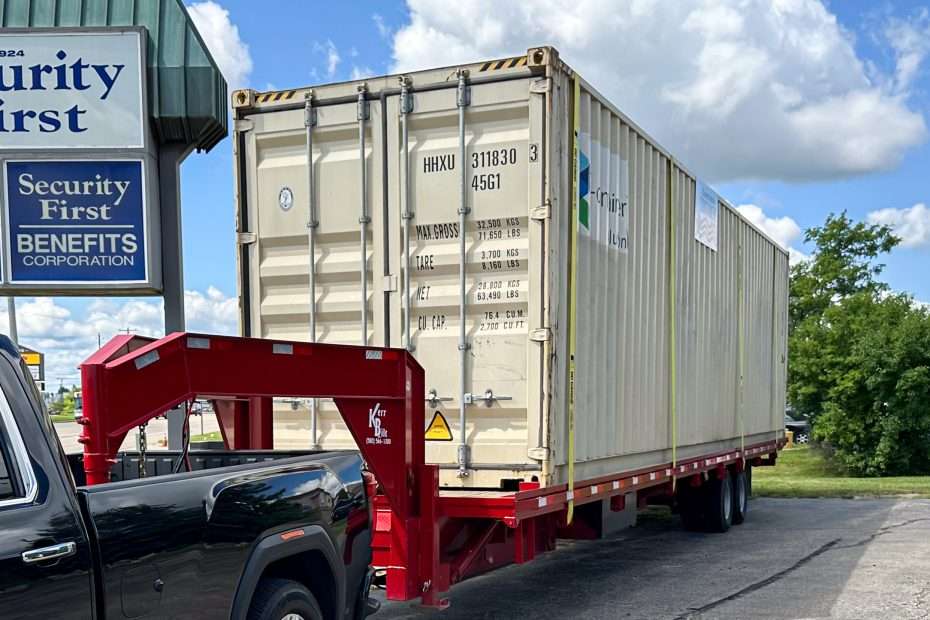
Shopping for a shipping container for the first time can feel like learning a new language. Listings may include terms such as WWT, IICL, HC, One-Trip, and Cargo Worthy: all describing different aspects of condition, construction, security, or delivery.
This glossary explains the most common shipping container terms in plain English. Use it when comparing used shipping containers in Michigan, reviewing product listings, or looking for a shipping container for sale near me.
Condition Grades
WWT: Wind and Water Tight
Definition: A used container inspected to keep out normal wind and rain.
Why It Matters: WWT is the standard condition for most on-site storage. Doors, door seals, roof, and walls should prevent leaks under ordinary weather conditions.
Typical Appearance: Surface rust, dents, patches, faded paint, and shipping marks may be present.
Price Effect: Lower cost than One-Trip or IICL units. Strong value for tools, furniture, equipment, inventory, and moving storage.
Constable Containers visually inspects each unit before release and checks it again with the customer at delivery. View the 20′ Used Wind and Watertight Container for an example of this grade.
IICL: Institute of International Container Lessors
Definition: A container maintained or repaired to stricter leasing-fleet standards established by the Institute of International Container Lessors.
Why It Matters: IICL containers generally offer better structural and cosmetic condition than standard used units. They may be described as IICL, multi-trip, or leasing-grade containers.
Typical Appearance: Fewer dents, cleaner paint, better-maintained doors, and more consistent repairs.
Price Effect: Higher price than basic WWT containers. A practical choice for long-term storage, commercial use, resale, or projects where appearance matters.
Review the current 40′ HC IICL Container inventory for availability and specifications.
One-Trip
Definition: A container manufactured overseas, shipped to the United States with one cargo load, then sold for land-based use.
Why It Matters: One-Trip units are near-new. Expect clean floors, tight door seals, minimal dents, and limited cosmetic wear from handling.
Typical Appearance: Fresh paint, uniform panels, clean interiors, and fewer repairs.
Price Effect: Premium pricing compared with standard USED or WWT containers. Recommended for high-visibility placements, modifications, offices, studios, and customers wanting the newest available unit.
See the 40′ High Cube One-Trip Container for a current product example.
Cargo Worthy: CW or CWO
Definition: A used container inspected as structurally sound for continued international shipping. Cargo-worthy units typically have a valid CSC safety plate.
Why It Matters: Cargo Worthy is a transportation standard: not simply a statement that the container is clean. The unit must meet structural requirements for ocean, rail, or truck movement.
Typical Appearance: Dents, touch-up paint, surface rust, and former shipping marks may still be present.
Price Effect: Usually more expensive than basic WWT because of structural condition and certification. For Michigan storage, WWT may be sufficient. For international export, request current documentation and certification details.
As-Is
Definition: Sold in its present condition, without a guarantee that it is wind and water tight.
Why It Matters: An As-Is container may have holes, floor damage, heavy rust, damaged doors, or structural issues. Inspect carefully before purchase.
Typical Use: Repairs, parts, agricultural projects, major modifications, or budget applications where weather protection is not the primary requirement.
Price Effect: Usually the lowest purchase price. Repair, transport, sealing, and modification costs can eliminate the initial savings.
Size And Construction Terms
High-Cube: HC
Definition: A container approximately 9 feet 6 inches tall: about one foot taller than a standard-height container.
Why It Matters: HC containers provide additional interior height for tall equipment, pallet racking, stacked totes, shelving, insulation, lighting, and conversion projects.
Typical Size: 40′ L × 8′ W × 9′6″ H exterior; approximately 320 square feet of floor area.
Price Effect: HC units commonly cost more than standard-height containers because of added height and demand.
Compare standard WWT storage with the added headroom of the 40′ HC Used Wind and Watertight Container.
Corten Steel: Weathering Steel
Definition: Weathering steel used for container walls, roof panels, and structural components.
Why It Matters: Corten steel is designed for outdoor exposure. It forms a protective surface patina that slows deeper corrosion when properly maintained.
Buyer Checklist: Look beyond color. Check for active corrosion, soft spots, roof damage, pinholes, and water intrusion.
Price Effect: Normal surface rust is expected on USED equipment. Extensive corrosion, repairs, or replacement panels affect value and condition.
Corner Castings
Definition: Heavy steel fittings welded to the eight corners of the container.
Why It Matters: Corner castings are the primary connection points for lifting, stacking, chassis transport, and securing containers. Shipping equipment connects to these castings using standardized hardware.
Buyer Checklist: Inspect for cracks, severe deformation, missing material, or damage around the corner posts.
Price Effect: Damaged corner castings can indicate structural problems and may significantly reduce value.
TEU
Definition: Twenty-foot Equivalent Unit.
Why It Matters: A 20-foot container equals 1 TEU. A 40-foot container equals approximately 2 TEUs. The term is common in freight, inventory, and logistics discussions.
Buyer Use: Helps compare container quantities, especially for commercial or industrial storage planning.
Door Hardware And Security
Cam Keepers
Definition: Brackets that help hold the door locking cams or vertical locking rods in the correct position.
Why It Matters: Properly functioning cam keepers support reliable door operation and help keep the locking rods engaged.
Buyer Checklist: Open and close both doors. Confirm that handles move properly, rods engage, and doors seal evenly.
Price Effect: Worn or damaged hardware may require repair. Door condition is especially important for daily-access storage.
Lock Boxes
Definition: A welded steel shield surrounding the padlock area on the container doors.
Why It Matters: A lock box protects the padlock from bolt cutters and reduces access to the shackle. It provides better security than a padlock mounted directly through the door handle.
Typical Use: Construction equipment, business inventory, tools, vehicles, and residential storage.
Price Effect: New containers frequently include lock boxes. Used units without them may require an add-on installation.
Twist Locks
Definition: Mechanical devices used to secure a container to a trailer, chassis, railcar, ship, or stacking frame through the corner castings.
Why It Matters: Twist locks secure the container during transportation. They are different from the padlock used to secure the doors.
Buyer Use: Important when relocating containers, stacking units, or using specialized transport equipment.
Delivery And Transport Terms
Tandem Axle
Definition: A trailer or truck configuration with two axles supporting the rear portion of the load.
Why It Matters: Tandem-axle equipment distributes the container’s weight and supports stable road transport.
Buyer Responsibility: Confirm that the delivery route and placement area can support heavy truck traffic. Soft soil, wet grass, mud, and steep grades can prevent delivery.
Tilt-Bed Delivery
Definition: Delivery using a hydraulically operated bed that tilts so the container can slide or be winched onto the prepared site.
Why It Matters: A tilt-bed truck can often place a container without a crane. The driver needs a suitable approach, level or firm ground, and enough room to unload safely.
Buyer Checklist: Prepare the pad before delivery. Plan door orientation, drainage, future access, and space around the container.
Delivery Clearance
Definition: The open space required for the truck to approach, tilt, unload, and exit.
Required Information:
- Address or ZIP Code
- Container size
- Straight approach distance
- Driveway or access width
- Overhead clearance
- Trees, wires, buildings, fences, and utility poles
- Ground condition
- Final placement location
As a general planning figure, allow at least 110 feet of straight clearance from the placement area. A 40′ or 40′ HC delivery may require approximately 120 feet, depending on the truck, site, and unloading position. Confirm exact requirements with Constable Containers before scheduling.
Condition And Moisture Terms
Pinhole Rust
Definition: Small corrosion holes in the steel roof or wall panels.
Why It Matters: A pinhole can allow water inside and compromise a WWT guarantee. Small holes may be repairable with patches or plating, but they should not be ignored.
Inspection Method: Stand inside the container with the doors closed. Look for pinpoints of daylight, especially along the roof, corners, seams, and repaired areas.
Price Effect: Minor surface rust is normal. Active pinholes, leaks, or extensive corrosion affect condition and repair costs.
Condensation
Definition: Moisture that forms when warm, humid air contacts cooler interior steel.
Why It Matters: Michigan temperature swings can create “container rain.” Unmanaged condensation may cause surface rust, mold, wet cardboard, damaged furniture, and corrosion on tools or equipment.
Risk Factors:
- Wet items stored inside
- Poor air circulation
- Temperature changes
- Direct sun followed by cold nights
- Storage against exterior walls
- No ventilation
Venting
Definition: Fixed vents added to the container walls to improve air exchange.
Why It Matters: Venting helps reduce trapped humidity and condensation. It does not make a container climate-controlled, and vents should not replace proper leak inspection.
Buyer Checklist: Keep factory vents clear. Consider additional vents for long-term storage, seasonal equipment, furniture, or moisture-sensitive contents. Use insulation and vapor-control methods for finished conversions.
How To Choose The Right Grade
-
Define The Use
Storage only, commercial inventory, equipment, moving, export, or future conversion. -
Select The Size
20′: Approximately 150–160 square feet; easier placement and lower delivery complexity.
40′: Approximately 320 square feet; better for large inventories and job sites.
40′ HC: Extra vertical space for racks, equipment, and build-outs. -
Choose The Condition
WWT: Best value for standard on-site storage.
IICL: Better condition and appearance.
One-Trip: Near-new; premium price.
Cargo Worthy: For certified transport requirements.
As-Is: Lowest price; repair risk. -
Confirm Delivery Details
Provide the delivery ZIP Code, site address, access information, ground conditions, and desired placement. -
Review Total Cost
Include container price, delivery, site preparation, blocks or piers, security hardware, vents, repairs, and modifications.
Transparent Michigan Pricing And Personal Service
Constable Containers makes buying a shipping container in Michigan straightforward:
- 20′, 40′, AND 40′ HC INVENTORY
- USED, WWT, IICL, AND ONE-TRIP OPTIONS
- SALE AND RENTAL AVAILABILITY
- $500 FLAT DELIVERY UP TO 90 MILES
- AUTO-CALCULATED DELIVERY PRICING BEYOND 90 MILES
- INSTANT ZIP CODE QUOTING
- DELIVERY INSPECTION CHECKLIST
- FAMILY-OWNED, PERSONAL SERVICE
$100 OFF ON ALL CONTAINER PURCHASES : LIMITED TIME ONLY
To compare current options, visit the Constable Containers website, enter your ZIP Code, and request an instant quote. For help choosing between WWT, IICL, One-Trip, or HC inventory, contact Constable Containers.