
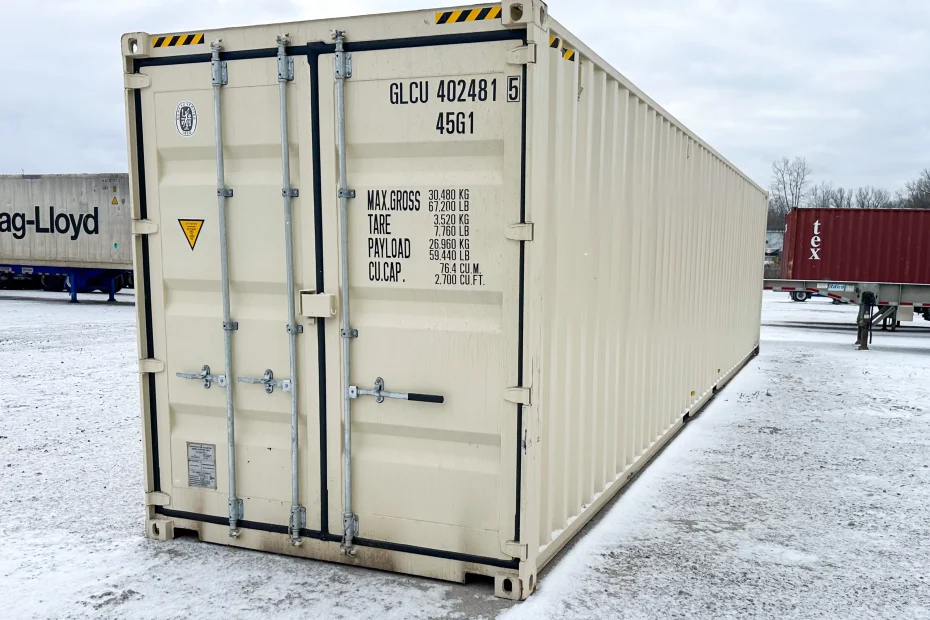
A shipping container can give Michigan homeowners secure, on-site winter storage for a car, boat, or recreational equipment. The key is choosing a size that fits through the doors, preparing the floor and approach, and managing moisture before freeze-thaw weather sets in.
Why A Container Works As A Winter Garage
A container offers a durable steel shell that won’t rot like a wood shed. Cargo doors close securely, and a USED WWT (Wind and Water Tight) unit can help protect equipment from rain, snow, and wind. Delivery and placement can be arranged far faster than building a conventional garage, subject to site access and scheduling.
The main tradeoff: standard containers are only about 8 feet wide outside, with an interior width of roughly 7 feet 8 inches. A full-size pickup or wide truck may be a tight fit. Measure the vehicle, mirrors, tires, and attachments before choosing a unit.
A 20ft container suits one vehicle or a collection of smaller toys and gear. A 40ft gives you more room for a vehicle and a work area, or potentially two compact vehicles, depending on their dimensions.
Size And Fit At A Glance
| Container | Approx. Floor Area | Common Storage Use | Approx. Cargo-Door Opening |
|---|---|---|---|
| 20ft | 160 sq. ft. | One vehicle with gear shelving, or a small boat on its trailer plus equipment | 7'8" wide × 7'5" high |
| 40ft | 320 sq. ft. | Two compact vehicles, or one vehicle plus a workshop zone | 7'8" wide × 7'5" high |
| 40ft High-Cube (HC) | 320 sq. ft. | Vehicle and gear needing extra vertical clearance | 7'8" wide × approximately 8'6" high |
Dimensions are approximate and can vary by container. Confirm the specific unit’s interior measurements and door opening before ordering. Measure the full vehicle or trailer width, including mirrors, and height, including roof racks or other accessories. Leave clearance for loading and unloading.

What Fits: Realistic Examples
- Fishing boat on a trailer: Often a good 20ft or 40ft candidate, depending on the boat and trailer length. Measure the tongue, motor, winch, and spare tire.
- Pontoon: Check the full beam width first. Many pontoons are too wide for a standard container opening.
- Jet skis: A pair on a double trailer may fit in a 20ft or 40ft, depending on trailer length and door clearance.
- Side-by-side UTV and snowmobile trailer: Possible in a 40ft if the combined length and loaded width fit.
- Motorcycles: A 20ft unit can leave room for several bikes, stands, and gear, depending on layout.
- Classic car: Often a practical container-storage candidate. Measure carefully and plan for airflow around the vehicle.
Choose A Container And Check The Fit
Start with the actual dimensions of everything you plan to store, not the advertised size of the container. For inventory and pricing, compare our 20ft shipping containers, 40ft shipping containers, and 40ft HC shipping containers.
For a basic layout, place the longest trailer or vehicle first and keep an aisle clear to the doors. Use shelves or wall hooks for lighter gear. Don’t block the container’s vents, locking bars, or access to stored equipment.
Access And Door Options
Factory cargo doors: included, secure, and weather-sealed. They work well when you can drive or roll equipment straight into the container and don’t need frequent side access.
A roll-up garage door or personnel door can make access easier, but it’s a structural modification. It adds cost, may require engineer-stamped drawings and local approval, and can affect WWT status and resale value. Roll-up door retrofits can cost a few thousand dollars installed. Ask about the specific modification, final fit, and warranty before proceeding.

Prepare The Site And Floor
A container floor sits roughly 6 inches above grade. Plan a level approach or suitable ramp so vehicles and trailers can enter without scraping or bottoming out. Set the unit on a firm, level base with good drainage. Check local requirements before delivery.
Container flooring is built for heavy cargo, but concentrated loads still matter. Use spreader boards under jack stands and trailer tongues to distribute pressure. Don’t rely on a jack alone to support a vehicle or trailer.
Winterize Vehicles And Equipment Before Storage
Cars And Trucks
- Clean the vehicle, including the underbody, and dry it before parking.
- Follow the owner’s manual for fuel storage. If appropriate for your vehicle, fill the tank to about 90–95% and add manufacturer-approved stabilizer. Run the engine for 10–15 minutes to circulate it.
- Disconnect the battery or use a compatible battery maintainer with a safe power setup.
- Check tire pressure. Use the manufacturer’s recommended pressure, and consider moving the vehicle periodically if practical.
- Don’t set the parking brake for long-term storage; use wheel chocks instead.
- Use a breathable vehicle cover. Avoid plastic tarps that trap moisture.
See Ford’s vehicle-storage guidance for storage steps specific to your vehicle.
Boats And Personal Watercraft
Winterize water systems with the correct antifreeze and follow the engine manufacturer’s instructions for draining, fuel stabilizer, and fogging. Remove valuables and electronics. Dry the boat and use a breathable cover. A local Michigan marina winterizing checklist is a helpful reminder, but always follow the instructions for your make and model.
Snowmobiles, UTVs, And Motorcycles
Clean off mud and road salt, stabilize fuel if required, and follow the manufacturer’s battery and engine-storage instructions. Protect exposed metal and use a breathable cover. For snowmobiles, check track and hyfax care guidance in the owner’s manual.
Control Moisture: The Michigan Winter Priority
A steel container is not climate-controlled. Freeze-thaw cycles can create condensation, sometimes called “container rain,” on the interior steel and stored equipment.
- Use at least two vents on opposite walls for cross-ventilation.
- Consider a solar roof vent for additional airflow.
- For a closed setup, use calcium chloride desiccant bags and replace them every 30–60 days, as directed on the product.
- Let snow and water melt off a vehicle before parking it inside.
- Never seal a wet or snow-covered vehicle in the container.
If you plan to keep fluids, batteries, or electronics above freezing, consider insulation and a safe heat plan. Spray-foam insulation may cost roughly $2,000–$5,000. Electrical work for a sub-panel, lights, outlets, and a battery-tender circuit may run about $1,500–$4,000. Use a licensed electrician for electrical installation.
Security And Winter Siting
Container cargo doors are more secure than a typical shed door. Add a puck lock and lockbox for extra protection. See our guide to shipping container security in winter.
Before ordering, check township or city rules for accessory structures, setbacks, screening, foundations, and electrical work. Requirements vary across Michigan. Confirm the delivery area is firm, level, and clear of overhead obstructions, with room for drainage and snow removal.
Container Garage Vs. Shed Vs. Pole Barn
A container conversion can be a faster and less expensive option than a new pole barn, with planning estimates ranging from about $4,600–$24,000 depending on the container, doors, insulation, and electrical work. Pole barns can range from roughly $15,000–$80,000 depending on size and features.
Containers offer security, portability, and quick placement. Pole barns offer more width, working height, and drive-through access for large machinery. The container’s approximately 8-foot exterior width is the primary limitation for wide vehicles and equipment.
Cost And Ordering Summary
| Item | Planning Estimate |
|---|---|
| Container garage conversion | $4,600–$24,000 |
| Spray-foam insulation | $2,000–$5,000 |
| Electrical sub-panel and basic circuits | $1,500–$4,000 |
| Roll-up door retrofit | Typically a few thousand dollars installed |
Estimates are for planning only. Final pricing depends on the container, modifications, site, and installation requirements.
Constable Containers is a family-owned Michigan business selling and leasing 20ft, 40ft, and 40ft HC containers, including used WWT units. Delivery is a flat $500 up to 90 miles, with costs auto-calculated beyond that range. Same-day delivery may be available for orders by 10 a.m.; otherwise, typical scheduling is 1–3 business days, subject to availability and site access. We use our own fleet, not brokers.
LIMITED-TIME OFFER: $100 OFF CONTAINER PURCHASES.
Get an instant ZIP code quote and confirm size, door clearance, delivery access, and local requirements before ordering.