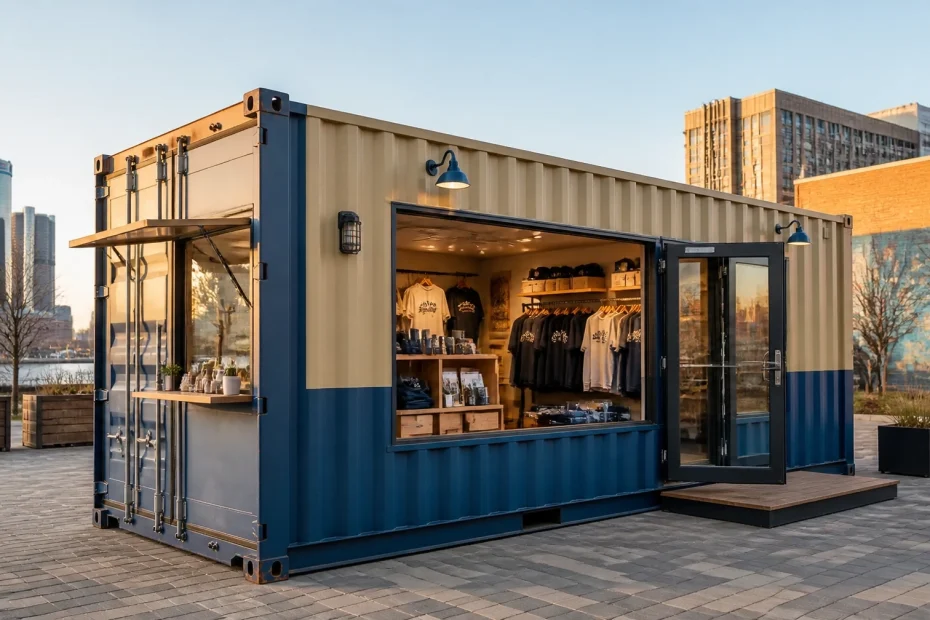
Detroit retailers are using shipping containers to launch faster, reduce fixed overhead, and test new locations without committing to a traditional storefront.
The format is visible throughout the city:
- The Shop at Campus Martius : Opened June 2026; Detroit-themed apparel, gifts, seasonal merchandise, postcards, and locally made products; operating Thursday–Sunday through October 2026.
- Detroit Shipping Company : Multi-vendor food hall, beer hall, event space, and retail destination demonstrating the demand for compact, shared-use commercial environments.
- Michigan Central Retail Box : A container-based retail installation created for high-volume events and merchandise sales.
- Dexter Avenue Pop-Up Initiatives : Shipping containers used to support neighborhood entrepreneurs and activate an underused commercial corridor.
For entrepreneurs, the opportunity is straightforward: secure a site, choose the correct container, complete the required modifications, obtain approvals, install merchandise, and open.
This guide covers the process.
Why Container Retail Works In Detroit
A shipping container offers a durable, modular shell for retail, food service, merchandise sales, ticketing, offices, and seasonal businesses.
Primary advantages:
- Fast deployment compared with ground-up construction
- Lower initial facility costs
- Weather-resistant steel construction
- Secure locking doors
- Flexible placement
- Reusability or relocation
- Distinctive visual identity
- Small-footprint operation
The Campus Martius example shows how one container can function as a branded retail destination in a high-traffic public space. The Dexter Avenue project shows how multiple containers can create a temporary commercial hub. Michigan Central’s Retail Box demonstrates how container retail can support major events and visitor traffic.
Detroit Shipping Company adds another useful model: multiple vendors, shared customer traffic, common amenities, and event programming. A single container does not need to operate in isolation. It can be part of a larger retail, food, art, or entertainment site.
Step 1: Choose The Correct Container Size
20 Ft Container: Single-Vendor Format
Best for:
- Apparel
- Gifts
- Jewelry
- Art
- Seasonal merchandise
- Small service businesses
- Ticketing or information kiosks
- Takeout windows
A 20 ft unit provides a compact footprint with enough room for shelving, a service counter, point-of-sale equipment, and limited backstock.
Use a 20 ft container when:
- One operator will staff the shop
- Merchandise is small and lightweight
- Customers will primarily order through a window
- The business requires a limited inventory footprint
- Site size is restricted
Constable Containers offers 20 ft units for sale and lease, including office-style units with customization options, insulation, HVAC, and electrical features. Review the 20 Ft Container Office options.

40 Ft Container: Larger Retail Format
Best for:
- Full apparel collections
- Furniture and home goods
- Multiple merchandise categories
- Larger customer queues
- Retail plus storage
- Shared vendor concepts
A 40 ft standard container offers approximately 320 square feet of floor area. It gives retailers more room for customer circulation, product displays, fitting areas, checkout, and backstock.
Choose a 40 ft unit when customers need to enter and browse instead of ordering from an exterior service window.
40 Ft High-Cube: Walk-In Retail And Higher Ceilings
A 40 Ft HC container provides an additional foot of exterior height compared with a standard unit.
Best for:
- Walk-in retail
- Taller shelving
- Suspended lighting
- HVAC ductwork
- Insulated ceilings
- Retail-plus-storage layouts
- Side-door access
High-cube units provide approximately 9'6" exterior height and additional usable volume. Constable inventory may include USED, IICL, Multi-Trip, and side-door configurations. View available 40 Ft High-Cube containers.
Step 2: Secure And Modify The Unit
A retail container needs more than standard cargo doors. Plan the modifications before ordering.
Typical retail modifications:
- Serving window
- Glass entry door
- Emergency exit
- Security door
- Electrical panel
- Interior lighting
- Exterior lighting
- Insulation
- Drywall or finished wall panels
- Flooring
- HVAC
- Shelving
- Point-of-sale wiring
- Exterior paint or branded graphics
- Awning or customer canopy
Serving Windows
A serving window works well for:
- Coffee
- Smoothies
- Snacks
- Merchandise pickup
- Ticket sales
- Customer service
The window should include a secure shutter or locking panel for overnight protection.
Doors And Egress
Walk-in retail requires safe customer access and an exit plan. Door placement affects:
- Customer flow
- Display layout
- Fire safety
- Accessibility
- Staff movement
- Emergency egress
Have the proposed layout reviewed before cutting the container walls.
Electrical, Insulation, And HVAC
Michigan weather requires a year-round plan. A steel container without insulation can become extremely hot in summer and cold in winter.
Budget for:
- Insulated walls and ceiling
- Electrical service
- Interior lighting
- Heating and cooling
- Ventilation
- Weather-sealed openings
A retail container may also require plumbing, fire protection, refrigeration, or food-service equipment. These systems must be coordinated with the local permitting authority and qualified contractors.

Step 3: Set A Build-Out Budget
A typical 20 ft commercial retail build-out may cost approximately $25,000–$55,000, depending on the condition of the base container and the scope of work.
Typical Budget Categories
- Base container: Unit-specific
- Doors and windows: Project-specific
- Serving window: Project-specific
- Electrical: Project-specific
- Insulation and interior finish: Project-specific
- HVAC: Project-specific
- Flooring: Project-specific
- Shelving and fixtures: Project-specific
- Branding and exterior finish: Project-specific
- Engineering, permits, and inspections: Local requirements
- Delivery and placement: Site- and ZIP-code-specific
The $25,000–$55,000 figure generally applies to the build-out, not necessarily every business expense. Include inventory, insurance, point-of-sale systems, signage, rent, utilities, labor, licensing, and site preparation in the complete startup budget.
A used WWT container can reduce the initial unit cost. A cleaner IICL or Multi-Trip unit may make more sense when appearance, condition, and customer-facing presentation are priorities.
Step 4: Confirm Zoning And Temporary Structure Permits
Do not place a container on a commercial lot and begin selling without confirming local requirements.
Contact the applicable city or township before ordering.
Ask about:
- Retail use approval
- Temporary use permit
- Temporary structure permit
- Building permit
- Site plan requirements
- Setbacks
- Parking
- Fire lanes
- Accessibility
- Sign regulations
- Electrical permits
- Mechanical permits
- Plumbing permits
- Certificate of occupancy
- Permit duration and removal date
For Detroit projects, contact the city’s building and zoning authorities with the property address and a basic container plan.
Your application package may require:
- Scaled site plan
- Container dimensions
- Proposed placement
- Door and window locations
- Occupant load
- Egress plan
- Utility connections
- Parking and fire access
- Operating dates
- Signage details
- Removal or relocation plan
Requirements vary by municipality and project type. A container used strictly for storage will not be reviewed the same way as a walk-in retail business serving the public.
Step 5: Plan Placement And Delivery
A retail container needs a usable site before delivery.
Confirm:
- Level, stable ground
- Access for the delivery truck
- Overhead clearance
- Utility connection locations
- Customer parking
- Pedestrian access
- Emergency vehicle access
- Setbacks from property lines
- Drainage
- Lighting
- Snow removal
- Room for future relocation
Constable Containers provides delivery throughout Michigan. Delivery may be available at a flat $500 rate up to 90 miles, with exact pricing and availability confirmed through the quote process.
Prepare adequate access for the delivery equipment. The container may need approximately 90–110 ft. of clear space, depending on the trailer, placement method, property layout, and unit size.
Enter your ZIP code through the Instant Quote tool to review available sale or rental options.

Step 6: Merchandise For Small-Space Retail
Container retail requires disciplined merchandising. Every square foot must support sales, circulation, storage, or branding.
Use:
- Wall-mounted shelving
- Pegboards
- Vertical displays
- Under-counter storage
- Fold-down tables
- Rolling fixtures
- Clear price tags
- Compact checkout stations
- Seasonal display zones
- Lockable backstock cabinets
Place high-margin or best-selling products at eye level. Keep the entrance open. Avoid blocking the serving window or creating a narrow customer path.
For Detroit-focused retail, follow the approach used by The Shop at Campus Martius:
- Local apparel
- Detroit-themed gifts
- Postcards
- Artist collaborations
- Seasonal products
- Limited-edition merchandise
- Small, giftable items
Limited releases create urgency without requiring a large inventory investment.
Step 7: Launch With A Defined Operating Plan
Before opening, finalize:
- Business hours
- Staffing
- Inventory replenishment
- Cash and card processing
- Security procedures
- Cleaning schedule
- Snow and ice removal
- Waste removal
- Weather closure policy
- Restocking access
- Daily sales tracking
- Seasonal removal or relocation date
Start with a limited product mix. Track sales by category. Expand only after identifying what customers actually purchase.
Start A Container Shop In Michigan
The 2026 Detroit retail landscape shows that shipping containers can serve as more than storage. They can function as USED, secure, weather-resistant commercial shells for pop-up shops, maker markets, food concepts, service businesses, and event retail.
Constable Containers is a local family business supplying and leasing 20 ft, 40 ft, and 40 ft HC containers throughout Michigan. We help entrepreneurs compare sizes, review delivery requirements, and identify practical storage or workspace solutions.
GET AN INSTANT QUOTE BY ENTERING YOUR ZIP CODE.
$100 OFF ON ALL CONTAINER PURCHASES : LIMITED TIME ONLY.
Use the Instant Quote tool to select:
- Rent Or Buy
- Container Size
- Delivery ZIP Code
- Delivery Date
- Business Or Residential Use
Need help selecting a unit or reviewing a delivery site?
Contact Constable Containers or call (810) 442-6639.
