
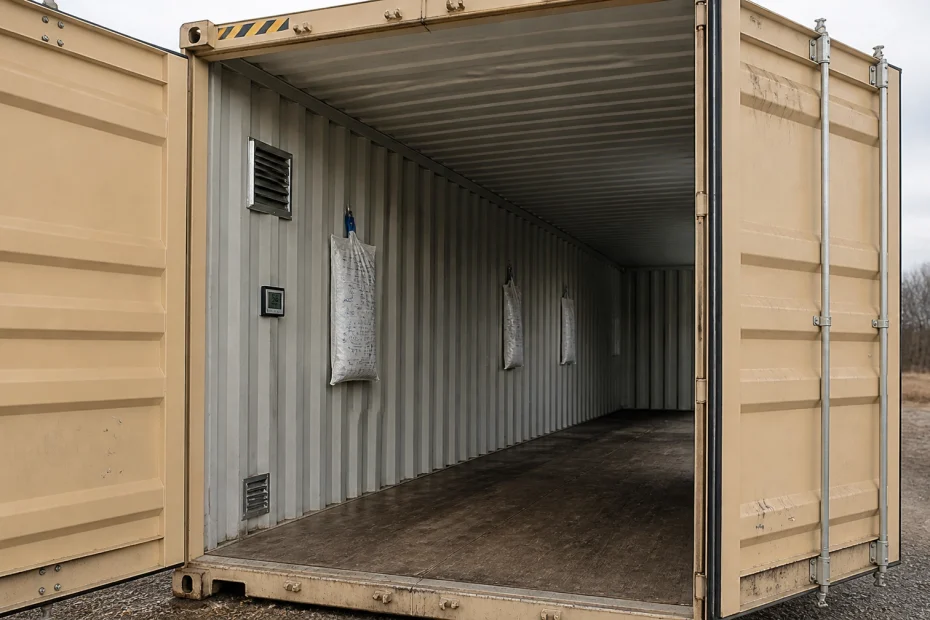
Michigan weather creates a full range of storage conditions: humid summers, spring thaw, freezing winters, rain, snow, and rapid temperature swings. Inside an unconditioned steel container, those changes can create condensation, surface rust, mold, damp cardboard, and damaged furniture.
The solution: start with a WWT (Wind and Water Tight) container, prepare the site correctly, maintain ventilation, control humidity, and load contents with airflow in mind.
Whether you need used shipping containers in Michigan or a storage container rental in Michigan, use the following checklist to protect your contents year-round.
Why “Container Rain” Happens
“Container rain” refers to condensation forming on the inside of the roof or walls and dripping onto stored items.
The process is straightforward:
- Warm, humid air enters the container.
- Steel walls and the roof cool quickly at night or during cold weather.
- Moisture in the air reaches the dew point.
- Water forms on the colder steel surface.
- Condensation drips onto boxes, furniture, tools, or vehicles.
Common moisture sources:
- Michigan temperature swings between day and night
- Humid summer air
- Spring thaw and saturated ground
- Cold winter steel surfaces
- Wet furniture, equipment, clothing, or vehicles loaded into the container
- Damp wood pallets or cardboard packaging
- Moisture released from the container’s plywood floor
For technical background on moisture movement in cargo containers, review the Virginia Tech white paper on moisture in sea containers.
1. Start With A WWT Container And Proper Site Placement
Ventilation and moisture products cannot compensate for an active leak or standing water beneath the unit.
Before loading:
-
Choose a WWT container
Inspect the roof, corners, doors, seals, and floor. USED containers may show dents, surface rust, and paint wear while remaining structurally sound and weather-resistant. -
Use a firm, level base
Recommended surfaces: compacted gravel, concrete, or level blocks. -
Elevate the container
Keep the container slightly off the ground with appropriate blocks or supports. This improves drainage and reduces moisture transfer through the floor. -
Maintain drainage
Avoid low areas where rainwater, snowmelt, or spring runoff collects. -
Check door seals
Door gaskets should make continuous contact around the opening. Replace damaged seals and address visible gaps. -
Keep the roof clear
Remove leaves, standing water, and heavy snow. Dented roof panels can collect water and increase corrosion risk.
Constable Containers provides 20FT, 40FT, and 40FT HIGH-CUBE containers for sale and lease throughout Michigan. Review the shipping containers for sale in Michigan guide for size, condition, and placement information.
2. Use Ventilation Correctly
Most shipping containers include factory-installed vents. These vents allow limited air exchange while helping keep rain and pests outside.
Factory Vents
- Keep all factory vents unobstructed.
- Do not stack boxes directly against vents.
- Check vents after snowstorms and during spring cleanup.
- Remove leaves, dirt, nests, and debris.
Factory vents help reduce trapped humid air, but they may not be enough for sensitive contents or long-term storage.
Passive Louvered Vents
Additional louvered vents can increase airflow without requiring power.
For better cross-ventilation:
- Place vents on opposite walls.
- Install one vent higher and another lower when possible.
- Use rain-resistant louvers.
- Seal the vent frame correctly to prevent leaks.
- Avoid positioning vents where they face direct water runoff.
Passive ventilation works best when outside air is drier than the air inside the container. During a humid Michigan summer day, opening doors or adding vents may bring more moisture inside.
Solar-Powered Vents
Solar-powered exhaust vents provide active airflow without a permanent electrical connection.
Useful applications:
- Long-term storage
- Remote job sites
- Containers holding tools or equipment
- Seasonal storage without grid power
- Units exposed to strong summer heat
Install the exhaust point high on a wall or roof area, with an intake vent positioned lower on the opposite side. Use a qualified installer and maintain the weather seal around the penetration.

3. Add Desiccants And Moisture Control
Ventilation reduces trapped air. Desiccants absorb moisture that remains inside the container.
Container Desiccants
Common options:
- Calcium chloride hanging bags
- Desiccant poles
- Moisture-absorbing tubs
- Silica gel packets
- Commercial container desiccant blankets
Placement:
- Hang bags near the upper side rails.
- Distribute products along the container length.
- Keep desiccants away from children and pets.
- Do not allow liquid-filled products to contact boxes, flooring, or metal surfaces.
- Replace products according to the manufacturer’s instructions.
Use additional silica gel packs inside sealed bins containing electronics, documents, instruments, or other moisture-sensitive items.
Dehumidifiers
A dehumidifier is the most effective option when electrical power is available.
- Use a unit rated for the container’s interior volume.
- Provide a safe power connection.
- Empty the reservoir or install a drain line.
- Keep air intake and exhaust areas clear.
- Monitor the container with a digital hygrometer.
For cold Michigan weather, desiccant-type dehumidifiers generally perform better than compressor units. Compressor models can lose efficiency as temperatures drop.
For many household and commercial goods, aim for approximately 35%–55% relative humidity. Always follow the storage requirements for the specific materials being stored.
4. Load Contents To Maintain Airflow
Correct loading prevents condensation from becoming trapped against stored items.
Elevate Everything Possible
Use:
- Dry pallets
- Shelving
- Dunnage
- Racking
- Pressure-treated supports
Keep contents off the plywood floor. Elevation improves airflow and protects items from minor condensation, floor moisture, or accidental water entry.
Leave Air Gaps
Recommended spacing:
- Leave space between cargo and the side walls.
- Avoid packing items tightly against the roof.
- Maintain an aisle for inspection and airflow.
- Keep vents visible and accessible.
- Do not fill every open area with loose boxes.
Store Only Dry Items
Before loading:
- Dry furniture completely.
- Remove snow and standing water from equipment.
- Dry tools after washing.
- Allow rugs and clothing to air out.
- Avoid loading immediately after rain whenever possible.
- Use dry pallets and clean packaging.
Use Breathable Covers For Furniture
Plastic covers can trap moisture against wood, fabric, and leather. Use breathable moving blankets, cotton sheets, or purpose-made furniture covers instead.
For sensitive items:
- Use sealed plastic bins instead of open cardboard.
- Add silica gel packs inside bins.
- Wrap electronics in appropriate vapor-barrier packaging.
- Keep cardboard elevated and away from the steel walls.
- Inspect for dampness during scheduled visits.
5. Vehicle Storage Tips
A shipping container can provide secure, on-site storage for cars, motorcycles, ATVs, and other equipment. Preparation matters.
Before storage:
-
Clean and dry the vehicle
Remove mud, salt, snow, and standing water. -
Drain or stabilize fluids as appropriate
Follow the vehicle manufacturer’s storage recommendations. Address fuel, coolant, oil, and battery requirements before extended storage. -
Ventilate the cabin
If appropriate for the vehicle and security conditions, leave windows slightly cracked. Do not leave openings exposed to rain or snow. -
Use a breathable car cover
Avoid non-breathable plastic sheeting that traps moisture against the paint and upholstery. -
Add moisture control
Place desiccant products inside the cabin and near the vehicle, without blocking ventilation or creating a trip hazard. -
Protect the tires and battery
Follow the manufacturer’s recommendations for tire pressure, battery maintenance, and long-term storage. -
Do not run the engine inside the container
Carbon monoxide and exhaust gases create serious hazards.

6. Adjust Your Plan For Michigan Seasons
Spring Thaw
- Inspect the base after snowmelt.
- Check for standing water and soft ground.
- Keep doors closed during rain and fog.
- Replace saturated desiccants.
- Look for damp floors, wet cardboard, and early rust.
Spring is a high-risk period because snowmelt, saturated soil, and fluctuating temperatures can increase both ground moisture and interior condensation.
Summer Humidity
- Keep vents clear.
- Use solar-powered ventilation where appropriate.
- Avoid opening doors during rain or peak humidity.
- Open doors briefly on dry, lower-humidity days.
- Monitor humidity with a hygrometer.
- Keep furniture and boxes away from steel walls.
Winter Freeze
- Remove snow from the roof before accumulation becomes excessive.
- Clear snow and ice from factory vents.
- Lubricate door hardware with a cold-weather-appropriate product.
- Check door seals for brittleness or damage.
- Avoid loading wet or snow-covered items.
- Use a cold-weather-rated dehumidifier if power is available.
For additional winter preparation, read How Shipping Containers Handle Michigan Winters.
7. Follow This Moisture-Control Setup
Use this five-step process for a residential, commercial, or job-site container:
- SELECT: Choose a WWT, USED, One-Trip, or IICL container based on contents and budget.
- PLACE: Set the container on a firm, level, well-drained base.
- VENT: Keep factory vents clear; add passive or solar-powered ventilation when needed.
- LOAD: Elevate contents, leave wall gaps, and store only dry materials.
- MONITOR: Check humidity, desiccants, seals, roof condition, and stored contents regularly.
A vented, properly placed container from Constable Containers remains a weather-resistant storage solution for Michigan conditions. The right setup helps protect the contents inside.
Get A Michigan Storage Container Quote
Constable Containers offers:
- 20FT, 40FT, AND 40FT HIGH-CUBE containers
- USED, WWT, One-Trip, and IICL options, subject to availability
- Sale and lease solutions
- Delivery throughout Michigan
- Instant ZIP code pricing
- Straightforward, transparent delivery costs
- $500 FLAT DELIVERY UP TO 90 MILES
- Family-business service and customized storage guidance
Need temporary storage? Review How to Rent a Shipping Container: Costs, Process, and Delivery.
GET AN INSTANT QUOTE: Visit Constable Containers, enter your ZIP code, choose the required size, and review current pricing.
$100 OFF ALL CONTAINER PURCHASES , LIMITED TIME ONLY
Contact US for help selecting a vented, weather-resistant storage container for your Michigan property.
Frequently Asked Questions
Can A Shipping Container Get Condensation Inside?
Yes. Condensation can occur when humid air contacts cold steel. Ventilation, desiccants, dehumidification, insulation, dry loading practices, and proper spacing reduce the risk.
Should I Leave The Container Doors Open For Ventilation?
Only briefly and only during dry conditions. Leaving doors open during rain, fog, or high humidity can add moisture instead of removing it.
Are Used Shipping Containers Suitable For Michigan Storage?
Yes, when the unit is structurally sound and WWT. Inspect the roof, doors, seals, floor, and vents before loading.
What Is The Best Moisture Control For A Rental Container?
Start with dry contents, pallets, wall clearance, clear factory vents, and container desiccants. If electrical power is available, add a properly sized dehumidifier and hygrometer.
Should Furniture Be Covered With Plastic?
Avoid tight plastic covers for long-term storage. Breathable moving blankets or furniture covers reduce dust while allowing moisture to escape.
{“@graph”:[{“@type”:”Article”,”image”:[“https://cdn.marblism.com/8EmfSm0vW05.webp”,”https://cdn.marblism.com/H3PkHARdCmn.webp”,”https://cdn.marblism.com/kwza3rZ_FAq.webp”],”author”:{“name”:”Constable Containers”,”@type”:”Organization”},”headline”:”How to Protect Your Container’s Contents from Michigan Humidity: Ventilation & Moisture Control”,”keywords”:[“used shipping containers Michigan”,”storage container rental Michigan”,”shipping container condensation”,”container rain”,”shipping container ventilation”],”publisher”:{“url”:”https://constablecontainers.com/”,”name”:”Constable Containers”,”@type”:”Organization”},”description”:”A practical guide to preventing condensation, container rain, mold, and moisture damage inside shipping containers used for storage in Michigan.”,”datePublished”:”2026-08-25″,”mainEntityOfPage”:{“@id”:”https://constablecontainers.com/”,”@type”:”WebPage”}},{“@type”:”FAQPage”,”mainEntity”:[{“name”:”Can a shipping container get condensation inside?”,”@type”:”Question”,”acceptedAnswer”:{“text”:”Yes. Condensation can occur when humid air contacts cold steel. Ventilation, desiccants, dehumidification, insulation, dry loading practices, and proper spacing reduce the risk.”,”@type”:”Answer”}},{“name”:”Should I leave the container doors open for ventilation?”,”@type”:”Question”,”acceptedAnswer”:{“text”:”Only briefly and during dry conditions. Leaving doors open during rain, fog, or high humidity can add moisture instead of removing it.”,”@type”:”Answer”}},{“name”:”Are used shipping containers suitable for Michigan storage?”,”@type”:”Question”,”acceptedAnswer”:{“text”:”Yes, when the unit is structurally sound and wind and water tight. Inspect the roof, doors, seals, floor, and vents before loading.”,”@type”:”Answer”}},{“name”:”What is the best moisture control for a rental container?”,”@type”:”Question”,”acceptedAnswer”:{“text”:”Start with dry contents, pallets, wall clearance, clear factory vents, and container desiccants. If electrical power is available, add a properly sized dehumidifier and hygrometer.”,”@type”:”Answer”}}]}],”@context”:”https://schema.org”}