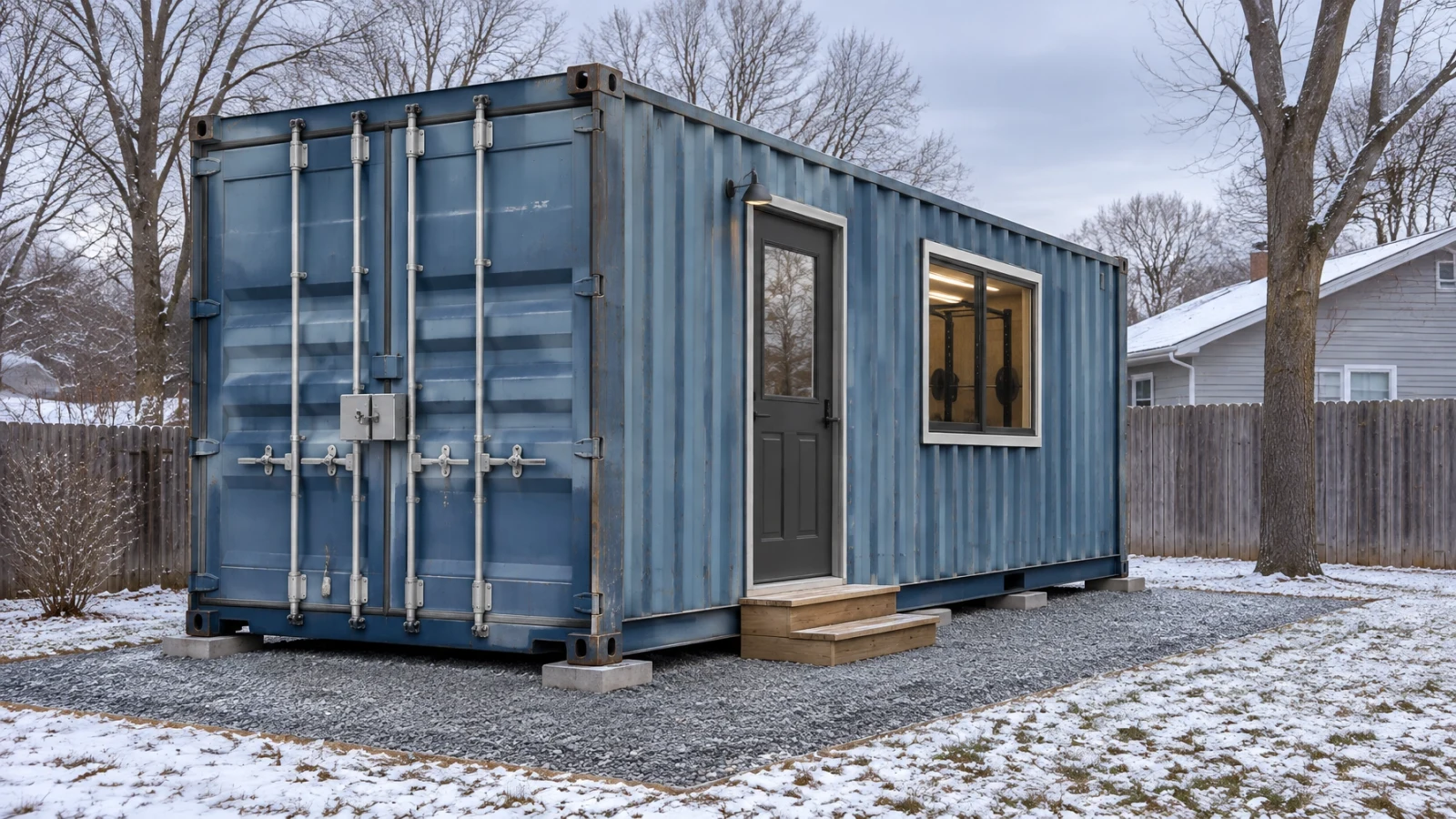
November and December are practical months to plan a backyard gym. Build now, and your January routine can start steps from home, without taking over the garage or basement.
A shipping container gym can work well as a compact, separate workout space. The tradeoff: Michigan winter use takes real planning for insulation, ventilation, heat, electrical service, and local approvals. Here’s what to consider before ordering a container.
Why A Container Gym Works
- Separate zone: Keep workout noise and equipment away from the house.
- Compact footprint: A 20ft container provides about 150 sq. ft. before insulation and finishes.
- Secure shell: Lockable steel doors and a weather-resistant structure.
- On-site access: Work out on your property, on your schedule.
- Flexible placement: A container can arrive quickly once your site and delivery route are ready.
A container is a shell, not a ready-made gym. For year-round use in Michigan, plan the conversion as a small conditioned building, not an uninsulated storage box.
Start With The Right 20ft Container
A standard 20ft container has interior dimensions of roughly 19ft 4in long × 7ft 8in wide × 7ft 10in high. A 20ft High-Cube (HC) has about 8ft 10in of interior height. Dimensions vary by unit, and insulation and finished walls reduce the usable space further.
That height difference matters. A standard unit can fit a rack, but overhead presses, pull-ups, and jumping movements may feel restricted. For a gym conversion, HC is the more practical choice when available. Measure your rack and planned ceiling finish before buying.
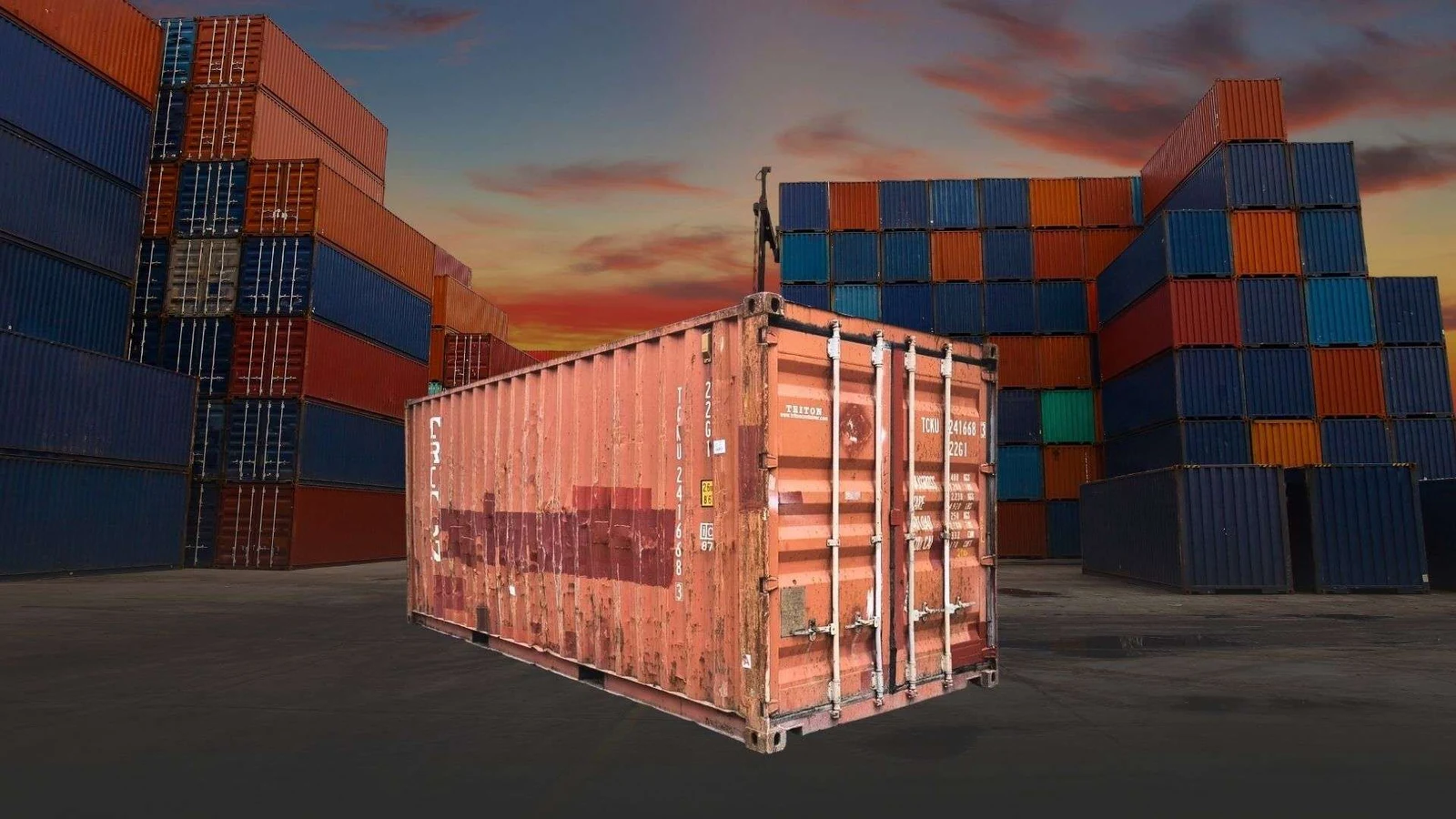
See Constable Containers’ used 20ft WWT units and shop container inventory. USED WWT means wind and water tight, though cosmetic wear is normal.
Plan A Compact Layout
Keep the floor plan simple and leave room to move.
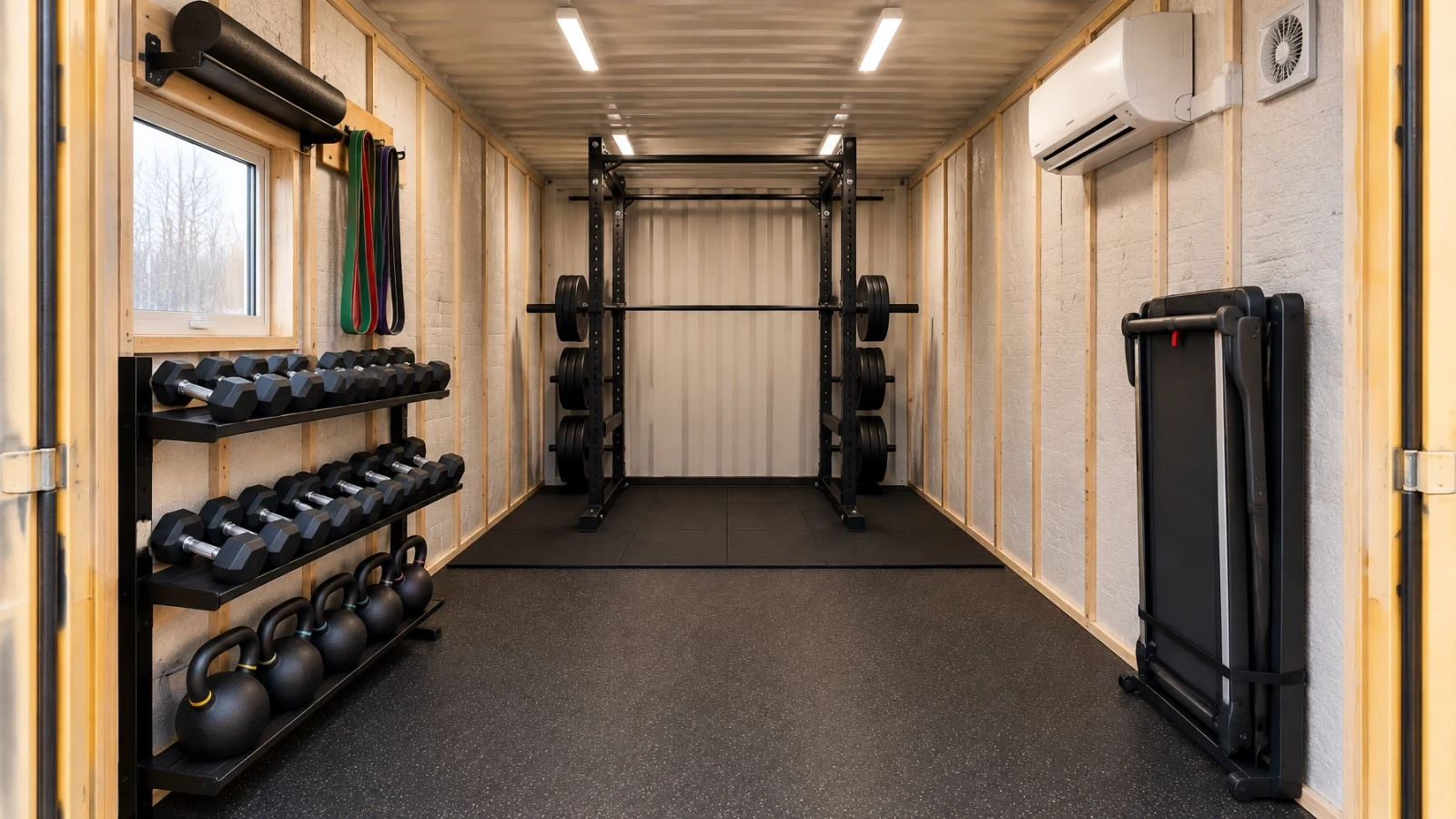
- Rack: Position a power rack or half rack near an end wall. Confirm the rack’s height and anchoring plan before installation.
- Lifting zone: Place 3/4-inch horse stall mats under the rack and barbell area.
- Center lane: Keep the middle clear for barbell movement, mobility, and floor work.
- Long walls: Use for plate storage, dumbbells, kettlebells, and a folding bike or treadmill.
- Accessories: Pegboard or wall-mounted storage helps keep the floor clear.
For tighter builds, consider a half rack or a foldable wall-mounted rack. Leave adequate room around the bar, and don’t plan on box jumps or burpees until you’ve checked the finished ceiling clearance.
Protect The Floor
Container floors use marine-grade plywood designed for container loads. That doesn’t mean rack feet and repeated weight drops should concentrate force on a few small spots.
Use a two-zone floor:
- Lifting zone: 3/4-inch stall mats beneath the rack and deadlift area. A 4ft × 6ft mat typically costs about $40–$60.
- Cardio and mobility zone: 3/8-inch interlocking rubber tiles for lighter equipment and floor exercises.
- Rack feet: Add suitable spreader protection beneath the feet; confirm the floor and anchoring details with your contractor.
Keep flooring dry and leave access to inspect the plywood below.
Insulation And Condensation: The Michigan Make-Or-Break
Steel gets cold. Warm, humid air from winter workouts can condense on cold steel, leading to damp surfaces and rust-prone equipment.
For regular winter workouts, plan on roughly 2–3 inches of closed-cell spray foam, applied directly to the steel by a qualified installer. Ask how the foam will be protected with an approved interior finish and whether the proposed assembly meets local requirements. Insulate the ceiling and floor as part of the full plan, not just the walls.
Without insulation and moisture control, the unit will be cold in January and workout humidity can create condensation. See our Michigan container insulation and winter guide.
Heating, Ventilation, And Electrical
Heating: A cold-climate mini-split in the 9,000 BTU class can be a starting point for a well-insulated 20ft space, but have an HVAC professional size the system for your insulation, windows, and use. Planning range: about $1,500–$4,000 installed. A properly installed electric heater may suit a simpler build. Avoid unvented propane or gas heaters in a small sealed space due to moisture and carbon-monoxide risks.
Air: A mini-split recirculates indoor air; it does not provide fresh air. Exercise adds humidity and CO₂. Plan a humidity-sensing extractor fan with a fresh-air intake, or ask an HVAC professional about a small HRV. A dehumidifier can help keep relative humidity around 30–50%. In an unconditioned setup, wipe down metal equipment after sessions.
Electrical: Plan for a dedicated 20–30A circuit or small subpanel, LED shop lights, and outlets for cardio equipment and fans. A licensed electrician can assess the route from your house. Typical planning range: $1,000–$2,500, depending on trench distance and site conditions.
Doors, Light, And Security
Cargo doors provide a wide opening on mild days and come with the container. In winter, opening both doors just to enter is inconvenient. Many gym conversions add a personnel door and a window for everyday access and daylight.
Cutting openings changes the steel structure. Get qualified design and reinforcement advice, and confirm permits and egress requirements with your local building department before work begins.
Gym equipment is theft bait. Use a lockbox and puck lock, consider motion lighting, and keep cargo door locking bars in working order. See our winter container security guide.
Permits, Siting, And Delivery
Before ordering:
- Check local rules. Ask your city or township about zoning, setbacks, building permits, and electrical and mechanical permits. Review HOA rules too. Start with our Michigan backyard zoning guide.
- Confirm the foundation. A compacted gravel pad may suit some placements. A permanent or modified gym may require engineered frost-protected supports. Read our foundation guide.
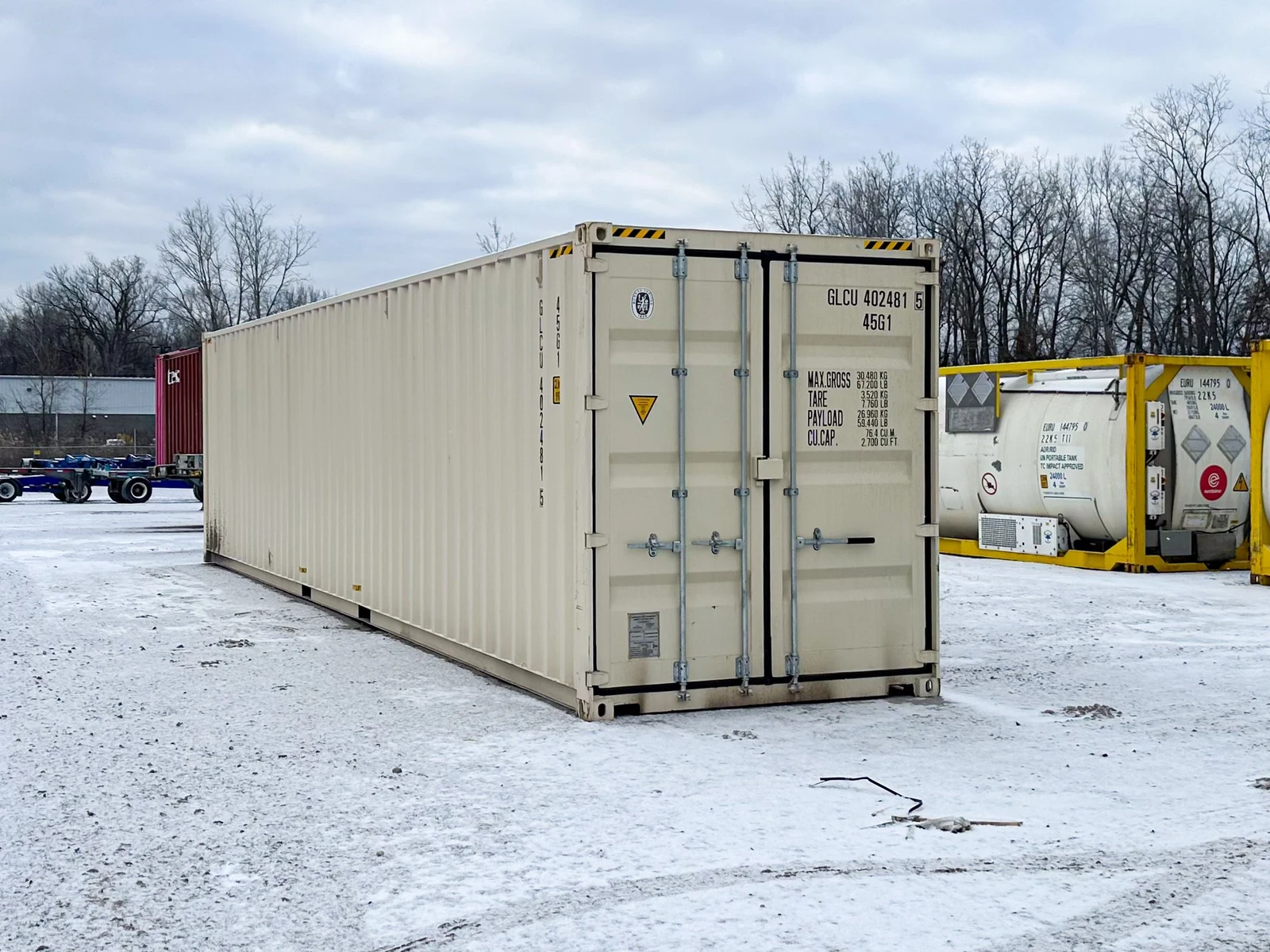
- Check delivery access. Plan about 90ft of straight clearance for a 20ft container and send photos if access is tight. Use the site-prep checklist.
- Plan the conversion before delivery. Finalize orientation, access doors, utility routes, pad, and equipment layout.
What Fits, And What Doesn’t
A 20ft layout can suit a power rack, bench, barbell and plates, a practical dumbbell set, kettlebells, a plyo box, and a folding treadmill or bike.
It’s not a good fit for a full cable rig, dual-stack machines, or long cardio equipment that needs generous stride and clearance. Measure every piece of equipment against the finished interior, not the container’s exterior dimensions.
Planning Budget
Typical planning ranges; contractor quotes, site conditions, and final specifications change costs.
| Item | Planning Range |
|---|---|
| Used 20ft container | $1,350–$3,000+ |
| Delivery | $575 up to 100 miles; calculated at checkout beyond 100 miles |
| Insulation and interior finish | $1,500–$4,000 |
| Flooring and rack-foot protection | $500–$1,500 |
| Electrical | $1,000–$2,500 |
| Heating and ventilation | $1,000–$5,000 |
| Door/window conversion, if chosen | $1,500–$5,000 |
A basic insulated build with electric heat and stall mats can cost far less than a full conversion with a mini-split, HRV, and new openings. Allow roughly $7,000–$25,000 for the build-out, excluding gym equipment, and get local quotes before committing.
Frequently Asked Questions
Can You Turn A Shipping Container Into A Gym?
Yes. A 20ft unit can work for a compact strength and cardio setup. Plan for finished dimensions, ventilation, insulation, electrical, security, and local approvals.
How Much Does A Container Gym Cost?
A realistic planning range is roughly $7,000–$25,000 excluding gym equipment. Foundation work, permits, engineering, and major modifications can add cost.
Does A Container Gym Need Insulation In Michigan?
For regular winter workouts, insulation and moisture control are strongly recommended. Cold steel and humid workout air can create condensation and contribute to equipment corrosion.
20ft Or 40ft For A Home Gym?
Choose 20ft for a focused rack, bench, weights, and compact cardio setup. Consider 40ft if you need more equipment or a wider activity area. Choose High-Cube height when overhead clearance matters.
Get An Instant Quote
Constable Containers is a family-owned Michigan business selling and leasing 20ft, 40ft, and 40ft HC containers, including used WWT units. We use our own in-house fleet, no brokers. Sales delivery is a flat $575 up to 100 miles, with freight calculated at checkout beyond 100 miles. Same-day delivery may be available for orders by 10 AM; otherwise, typical scheduling is 1–3 business days, subject to availability and site conditions.
LIMITED-TIME OFFER: SAVE $100 ON CONTAINER PURCHASES.
Enter your ZIP code to get an instant quote. Compare container options, then confirm your site and conversion requirements before you order.