A successful container delivery starts with your property, not the container. Measure the truck’s route, check the ground, clear overhead hazards, and mark the drop spot before delivery day. In Michigan, winter can offer firm frozen ground, but snow, ice, thawing soil, and plow banks can still stop a delivery.
Use this checklist before ordering a shipping container for sale near me or scheduling one of our portable storage containers in Michigan for delivery.
Step 1: Know What Truck Is Coming
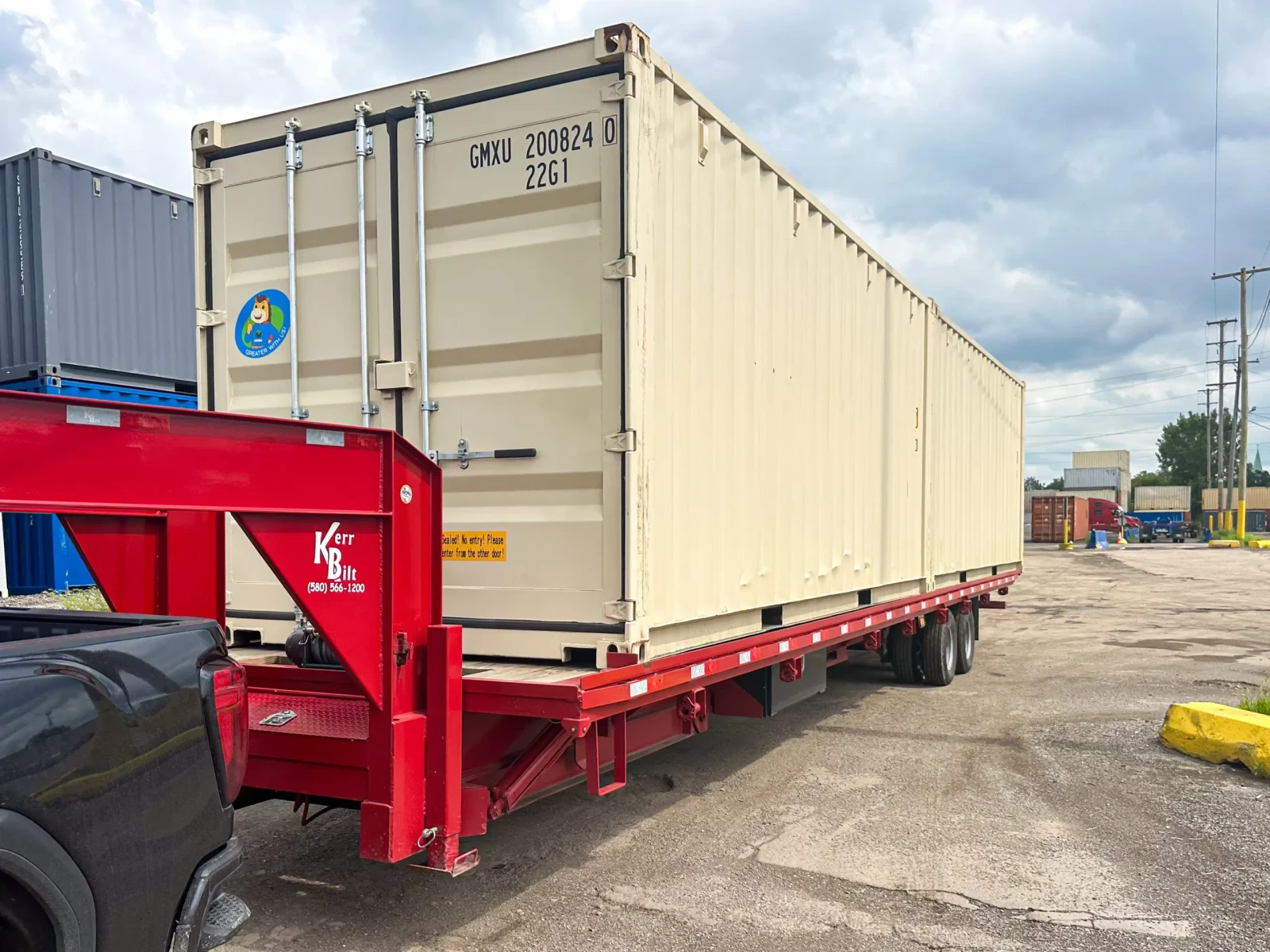
A tilt-bed, or slide-off, truck backs toward the drop spot. The driver tilts the bed, then the container slides gently backward off the truck onto the prepared surface.
That unloading method determines the space needed. The truck needs room to approach, position itself, tilt the bed, and slide the container into place. The required space is not just the container’s length.
Step 2: Measure The Full Delivery Route
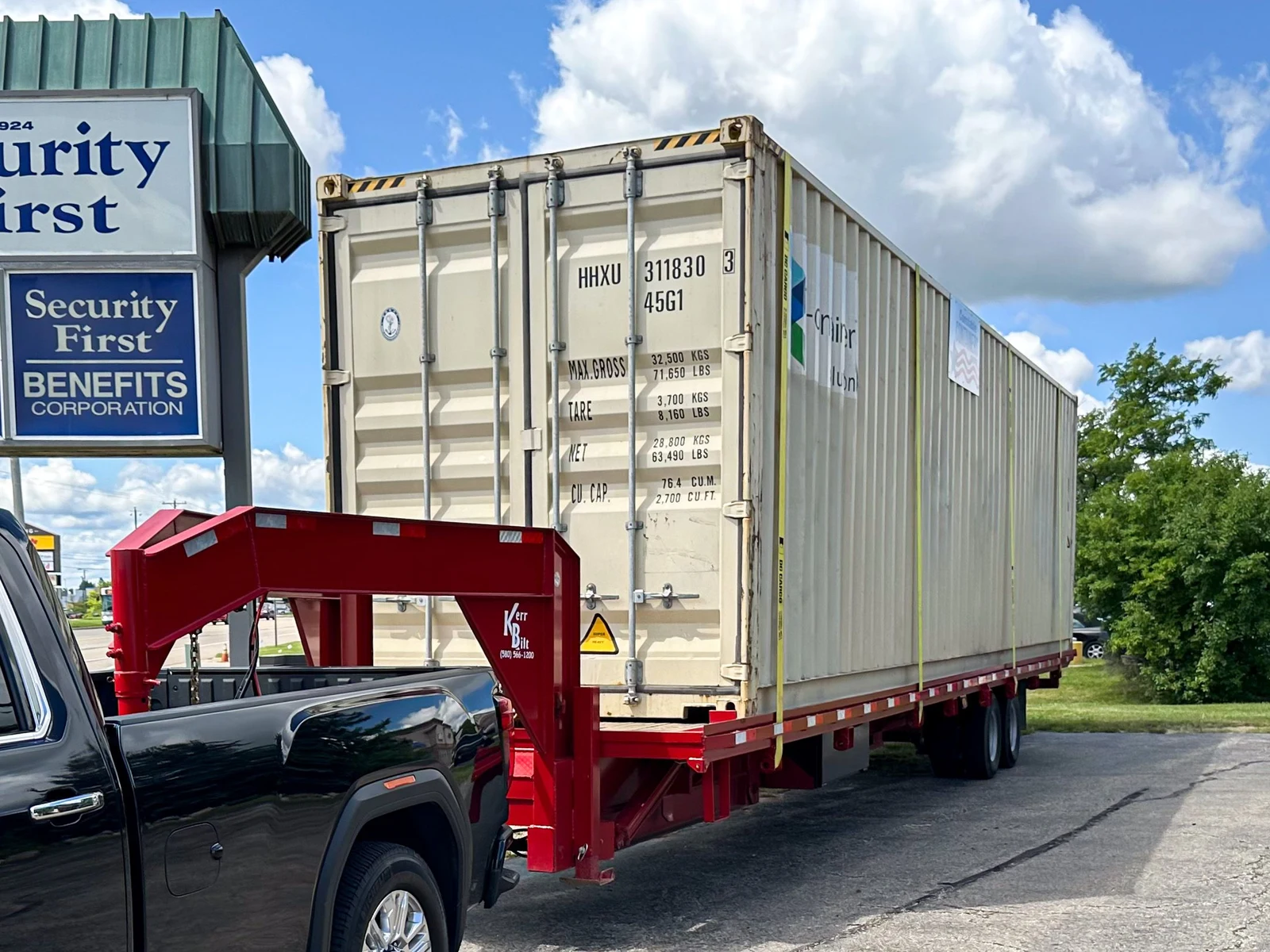
Walk from the street to the proposed drop spot. Measure the narrowest points and check the whole route, including turns and overhead obstructions.
- Straight-line space: As a rough estimate, allow about 60–70 feet for a 20ft container and 100–130 feet for a 40ft container.
- Use the delivery company’s requirement as the final word: Constable’s published guidance calls for about 90 feet of straight clearance for a 20ft container and 110 feet for a 40ft container. Actual needs depend on the truck, trailer, container, and site. Confirm your specific setup with us before delivery.
- Clear width: Plan for at least 12 feet of unobstructed path. A tight turn may need more room.
- Turning space: Check the entrance from the street, corners, and any spot where the truck must turn or back up.
- Overhead clearance: Plan for 14–16 feet of vertical clearance along the route, and confirm the truck-specific requirement with us. Check wires, low branches, eaves, carport covers, and basketball hoops. Snow-loaded branches can hang lower in winter. Never approach or trim branches near power lines yourself.
If your measurements are close, don’t assume the truck will fit. Send us photos or a short video so we can review the approach with you.
Step 3: Check The Ground And The Season
The truck and container need a stable surface. Frozen November or December ground can be firm and suitable for delivery, but it is not a guarantee. A thaw, wet soil below the frost, or an icy slope can still create problems.
Watch for these conditions:
- Soft spring ground: Mud, wet grass, sand, and loose fill can give way under a heavy truck. Delivery may be refused if the route is unsafe.
- Snow at the drop spot: Clear the intended landing area down to firm ground or prepared support pads. Don’t let the container land on a snow cushion that can shift or melt.
- Snow on the access route: Plow the driveway, turning area, approach, and drop zone. Clear plow banks that block the truck or landing area.
- Ice or slopes: Sand or salt icy and sloped sections. Tilt-bed trucks are not four-wheel drive, and a slick approach can prevent safe positioning.
- Changing conditions: If heavy snow, rain, or a thaw changes your site after you’ve sent photos, contact us before the truck is dispatched.
Step 4: Prepare And Mark The Drop Spot
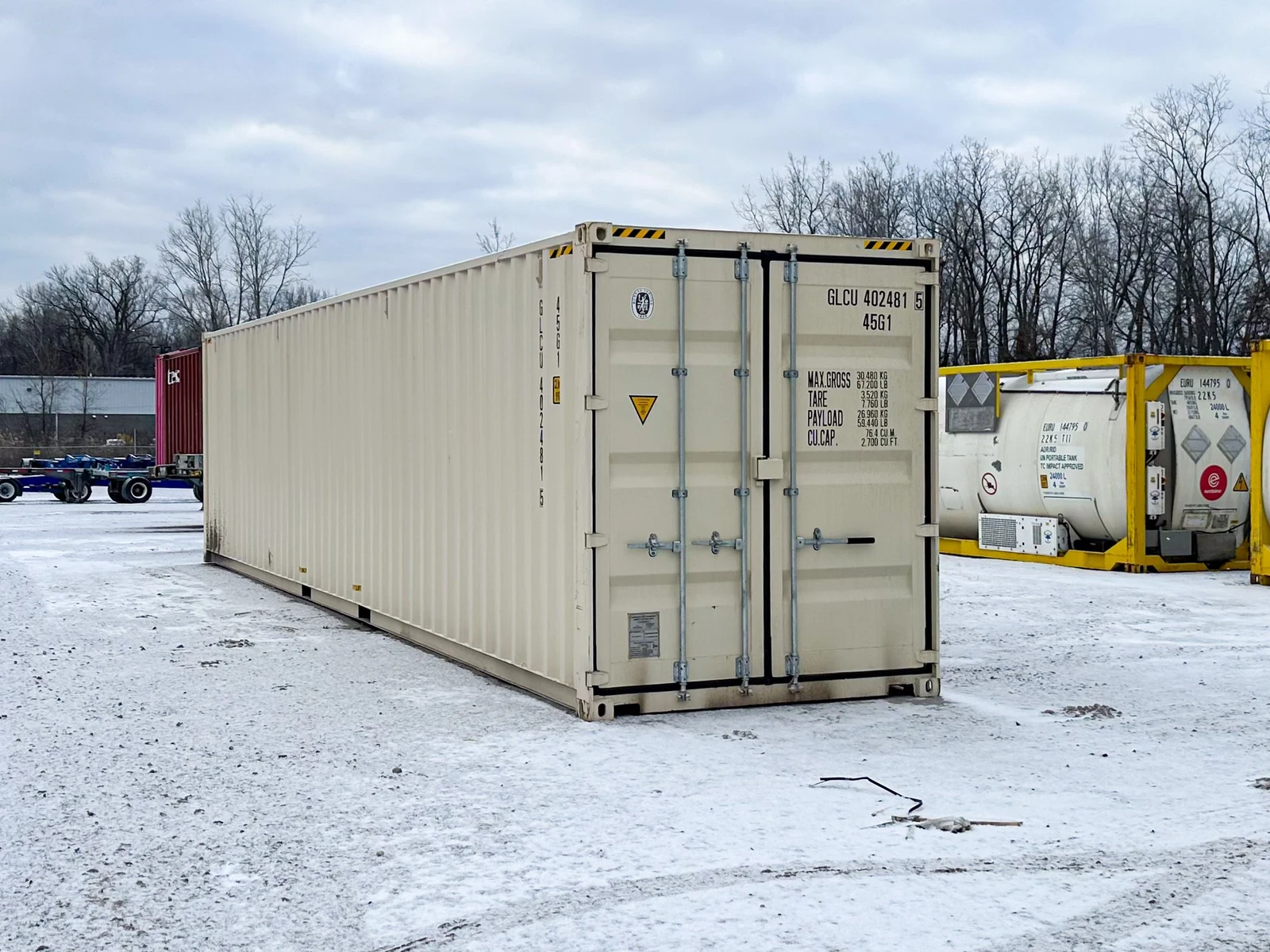
Choose a firm, level location with enough room to open the doors and reach the container after delivery. A level container helps the doors operate properly. For guidance on support options, read our post on shipping container foundations and frost protection.
Before delivery:
- Choose the orientation: Decide which direction the doors should face. Confirm it with us and the driver before unloading.
- Prepare the supports: Use appropriate corner supports, such as blocks, railroad ties, or a gravel pad. Set supports at the container’s corners to help prevent frame twist.
- Check drainage: Direct water away from the door end and container footprint.
- Mark the location: Use stakes or paint to show the intended corners. Keep markers clear of the truck’s path.
- Leave working room: Make sure the door end can open fully and there’s usable access for loading or unloading.
Step 5: Clear The Access Route
Look at the route as if you were driving a large truck and trailer through it. Move or address anything that could block access, limit turning, or create a safety risk.
- Gates: Check clear opening width and unlock them before arrival.
- Culverts and bridges: Confirm their weight limits before a heavy truck crosses.
- Septic fields and buried utilities: Keep trucks off them. Identify the route and communicate any restrictions.
- Fences and tree limbs: Check both sides of the truck’s path. Do not trim near utility lines.
- Vehicles, trailers, firewood, and equipment: Move them out of the approach, turning area, and drop zone.
- Kids’ equipment and outdoor items: Clear playsets, bikes, bins, and anything else in the truck’s path.
Keep the truck on a route you know can support its weight. If you’re unsure about a culvert, septic field, or buried line, tell us before delivery so we can discuss the safest plan.
Step 6: Get Ready For Delivery Day
A prepared site helps the driver place the container without delays. The unloading process typically takes under an hour, depending on access and site conditions.
On delivery day:
- Keep pets and children inside and away from the truck and unloading area.
- Be present, or make sure you’re reachable by phone.
- Point out the marked drop spot and confirm the door orientation before unloading begins.
- Stay clear while the driver positions and tilts the truck. Follow the driver’s instructions.
- Before the truck leaves, check that the container sits level and test the doors.
- Note any visible damage or concerns on the delivery paperwork before signing.
Step 7: Flag Site Problems Before Delivery
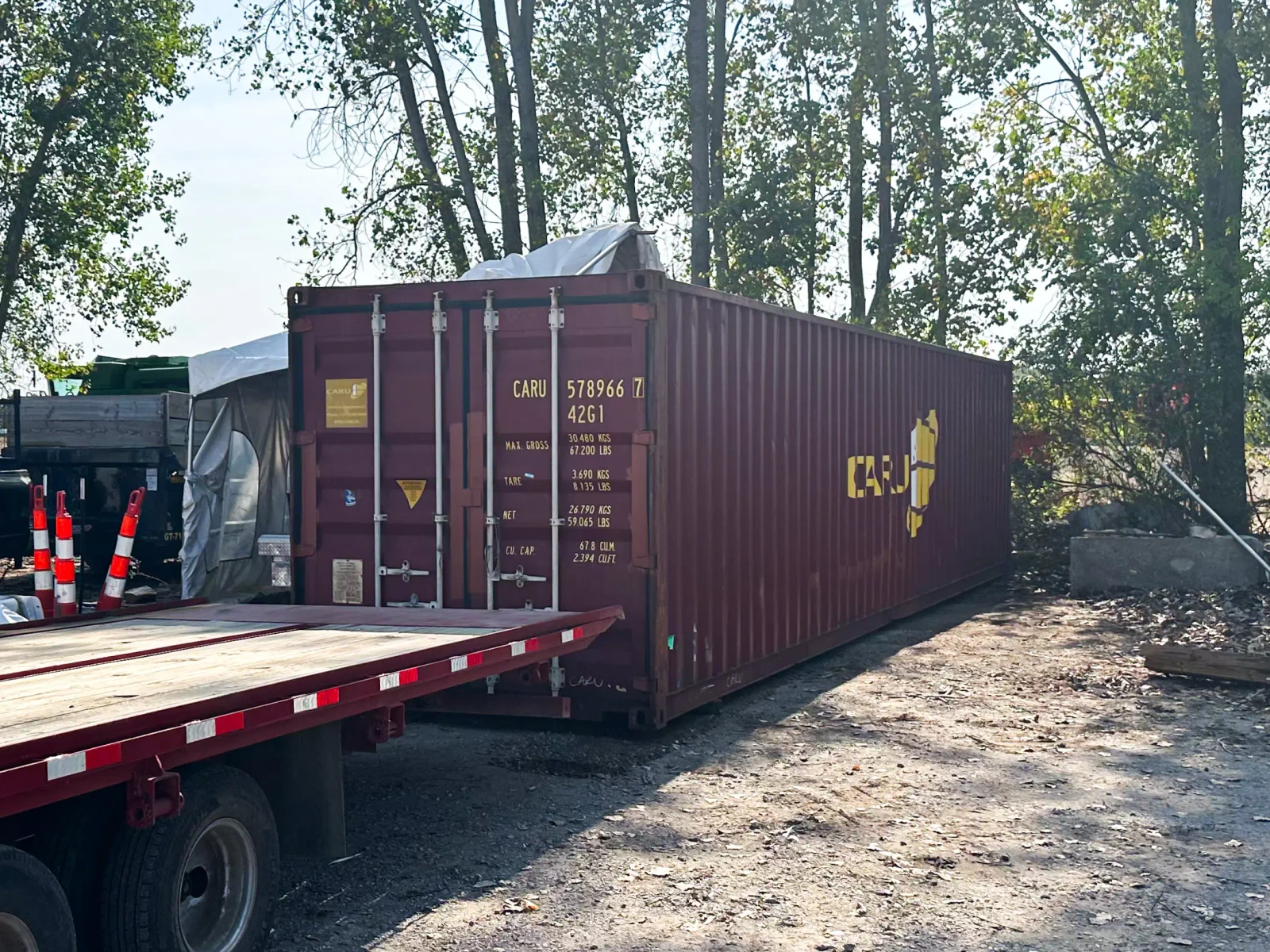
Steep slopes, tight corners, soft ground, overhead wires, and uncertain load limits can make a delivery unsafe. Tell us about these conditions early. A photo review or site visit, when appropriate, can help identify access problems before delivery day.
Drivers can refuse unsafe delivery conditions. That can mean a missed delivery and a new schedule for everyone. If you’re comparing costs for a possible relocation or a difficult site, see our guide to shipping container moving costs in Michigan.
Also check local zoning, permit, and HOA rules before scheduling. Requirements vary by municipality and property. Our guide to container placement and permits covers questions to raise with your local office.
Winter Delivery Checklist
Before a November or December delivery, confirm:
- Route plowed and wide enough for the truck
- Drop spot scraped to firm ground or prepared supports
- Plow banks cleared from the entrance and placement area
- Ice and slopes treated with sand or salt
- Snow-loaded branches and overhead hazards checked
- Current site photos shared if conditions have changed
If a major storm is forecast, plan ahead where possible. Order by 10 AM for same-day delivery, when available. Otherwise, typical scheduling is 1–3 business days. Delivery timing is subject to availability and safe site conditions.
Get A Quote For Your Delivery
Constable Containers is a family-owned Michigan business with an in-house delivery fleet, not a broker network. Get instant pricing by entering your ZIP code in our quote tool. Sales delivery is a flat $575 up to 100 miles, with freight calculated at checkout beyond 100 miles.
We sell and lease 20ft, 40ft, and 40ft HC containers. LIMITED-TIME OFFER: SAVE $100 ON CONTAINER PURCHASES. Check current availability and pricing when you request your quote.
Frequently Asked Questions
How Much Clearance Does A Shipping Container Delivery Need?
As rough estimates, allow 60–70 feet for a 20ft container and 100–130 feet for a 40ft container. Constable’s published guidance calls for about 90 feet for a 20ft and 110 feet for a 40ft. Truck and trailer requirements vary, so confirm the clearance for your delivery before scheduling.
Can A Container Be Delivered In Winter?
Yes, when the route and drop spot are safe. Frozen ground can provide a firm surface, but clear snow from the approach and landing area, treat ice, and remove plow banks. Tell us if a thaw or storm changes site conditions.
What Ground Prep Is Needed?
Choose a firm, level drop spot with appropriate corner supports and drainage away from the container. Avoid soft, saturated, loose, or uneven ground. For foundation options, see our Michigan container foundations guide.
Do I Need To Be Home For Delivery?
Being there is best so you can confirm the exact placement and door direction. If you can’t be present, arrange for someone who can communicate with the driver and inspect the container before signing.