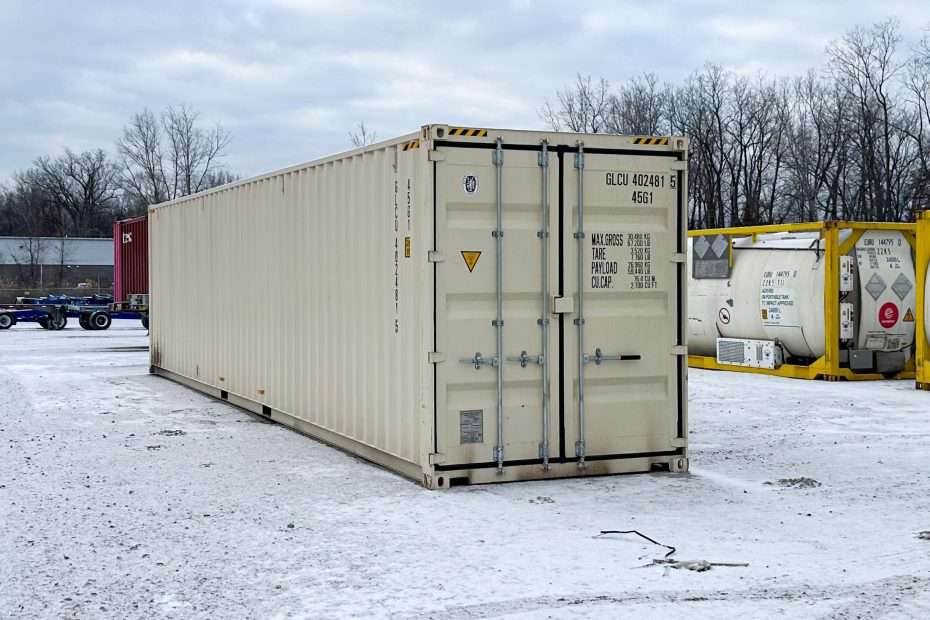
Winter changes the security picture for containers on rural properties, construction sites, farms, and seasonal homes. Short daylight hours, vacant job sites, and fewer people nearby can make theft less likely to be noticed quickly. Tools, fuel, ATVs, snowmobiles, and other equipment may be especially tempting targets.
Snow can work both ways. Footprints around the doors may reveal activity, but darkness, snowbanks, and fresh snowfall can make a site less visible from the road or cover tracks. A dependable winter plan combines a protected lock, clear site visibility, and regular checks.
Build A Three-Part Lock Layer
No single lock prevents every attack. Use complementary layers to make the doors harder to access and tamper with.
1. Choose A Weather-Resistant Puck Lock
A hardened-steel puck lock has a compact, shrouded body that limits access for bolt cutters and prying tools. For outdoor use, compare corrosion resistance, cylinder protection, and the manufacturer’s cold-weather guidance. Stainless or other corrosion-resistant components can be a practical choice in a wet, freezing climate. ABUS 26/70 and Abloy PL362-style locks are examples to compare, but check the specifications of the exact model before purchasing.
A puck lock by itself is not a complete solution. If its hasp or mounting point remains exposed, that hardware may still be attacked. Pair the lock with a suitable lockbox.
2. Shield The Lock With A Steel Lockbox
A shipping container lock box covers the lock and hasp, restricting access for cutting and prying tools. A heavy-duty box, often made from roughly 1/4-inch steel, can be continuously welded over the locking point to make access more difficult.
A lockbox is a deterrent, not a guarantee against grinders or other determined attacks. Have a qualified fabricator install a welded box so it does not interfere with the door or locking bars. If you lease your container, ask the owner before welding or making any modification. A bolt-on lockbox may be an option when installation is approved.
3. Add A Cross-Bar Where Appropriate
A properly fitted steel cross-bar across both door leaves can help resist pry-bar spreading. Use it as an added layer alongside the container’s factory locking bars and the lockbox, not as a substitute for either.
Consider access and safety before adding an internal bar. It should not trap anyone inside, and it may not suit containers that need frequent entry or emergency access.

Maintain Locks Before The First Freeze
Cold weather exposes weak points: water in the keyway can freeze, corrosion can make a cylinder stick, and doors that are out of alignment can become harder to latch.
Before winter:
- Inspect the lock, hasp, lockbox, hinges, door seals, and locking bars for corrosion, damage, or looseness.
- Confirm the doors close and latch smoothly. Correct door or hardware alignment issues before they worsen.
- Clean and dry the keyway. Use graphite or a dry PTFE lubricant only if the lock manufacturer recommends it for that cylinder.
- Avoid WD-40 and heavy grease in the keyway. Use the lock maker’s specified lubricant and maintenance instructions.
- Cover the keyway when the lock does not have an integrated weather cap. Keep snow, ice, salt, and de-icer out of the cylinder.
For a frozen lock, do not force the key or pour boiling water on the lock. Sudden heat can damage components, and water may refreeze inside the cylinder. Try a commercial lock de-icer according to its directions, or gently warm the key in your hands before inserting it. Avoid open flames. Once the lock opens, dry it and address how moisture got inside. For general outdoor-lock guidance, see Master Lock’s winter maintenance tips.
Add Lighting And Detection For Remote Sites
Lights and cameras can help detect activity, but choose equipment for the location and winter conditions.
- Clamp-mounted LED floodlights: A simple option for temporary sites or areas without permanent wiring. Aim lights at doors and approaches without shining into neighbors’ windows or a roadway.
- PIR motion sensors: Motion-activated lighting can startle an intruder and uses less power than lights left on continuously. Check sensor placement so snow, blowing branches, or passing traffic do not cause constant triggers.
- Solar camera systems: For a remote property, consider a system with cellular connectivity, useful night vision, motion alerts, and a cold-weather operating range suited to the site. AI detection may help reduce alerts from blowing snow or animals, but test it in real conditions.
Steel walls can substantially weaken wireless signals. If a camera or tracker is inside the container, it may not communicate reliably with the doors closed. Choose a system designed for an external antenna and mount it outside the steel shell. Where practical, place it at least 30 cm above the roof, following the antenna manufacturer’s clearance and installation instructions. Use the cable type and length recommended for the system; LMR-400 may suit some longer coaxial runs, but compatibility matters.
Cold also affects power. Low-temperature-rated lithium AA cells often perform better than alkaline cells in cold conditions, but always follow the device manufacturer’s requirements. For solar systems using LiFePO4 batteries, choose a battery and charge controller designed for winter operation. A heated battery or a low-temperature charging cutoff may be needed because many lithium batteries should not be charged below the temperature specified by their manufacturer.
Use Placement And Snow As Part Of The Plan
A secure container is easier to monitor when the site helps you notice changes.
- Face the doors toward activity. When the layout allows, orient the doors toward the house, barn, active work area, or road, rather than away from regular sightlines.
- Anchor the unit appropriately. Anchoring can reduce movement and discourage removal. A determined crew with suitable lifting equipment may be able to take an unanchored container. Ask a qualified installer about an anchor method compatible with the unit and site.
- Keep the approach plowed. A maintained access path signals that someone checks the property and lets you inspect the doors. Schedule a weekly check when possible.
- Watch the snow around the doors. Footprints or disturbed snow can indicate activity. Wind and fresh snowfall make this an imperfect record, so use it alongside other checks.
- Secure the perimeter. Maintain fence lines and gate locks. Avoid signs or labels that advertise valuable tools, fuel, or equipment inside.

Before You Close A Seasonal Property
Vacant cabins and seasonal properties up north can be out of sight for long stretches. Complete this checklist before leaving for the off-season:
- Remove especially valuable or portable items where possible.
- Create an inventory of remaining contents, including serial numbers for equipment.
- Photograph the contents and keep a copy of the records somewhere other than inside the container.
- Check your insurance policy for storage, theft, and documentation requirements.
- Inspect the container’s WWT condition, including door seals and hardware, to help protect contents from wind and water.
- Test the locks, lubricate them as directed, and secure the doors.
- Set up remote camera or sensor alerts, then test connectivity with the container doors closed.
- Ask a neighbor, caretaker, or property manager to check the site monthly and after severe weather.
A container can provide a sturdy place to store seasonal equipment, but security depends on how it is locked, placed, monitored, and maintained.

Choose A Container And Plan Your Setup
Constable Containers is a family-owned Michigan business selling and leasing 20ft, 40ft, and 40ft High-Cube containers. Units include secure locking bars. For additional protection, plan your lockbox, lighting, and site security before storing valuable equipment.
Get an instant price by entering your ZIP code at ConstableContainers.com. Delivery is a flat $500 up to 90 miles, with distance-based cost auto-calculated beyond that. Constable Containers uses its own in-house delivery fleet, with no brokers. Same-day delivery may be available for orders placed by 10 a.m.; otherwise, delivery is typically scheduled within 1–3 business days. SAVE $100 ON CONTAINER PURCHASES DURING THE LIMITED-TIME PROMOTION.
View a 40ft Standard Used WWT container or review winter container considerations.