
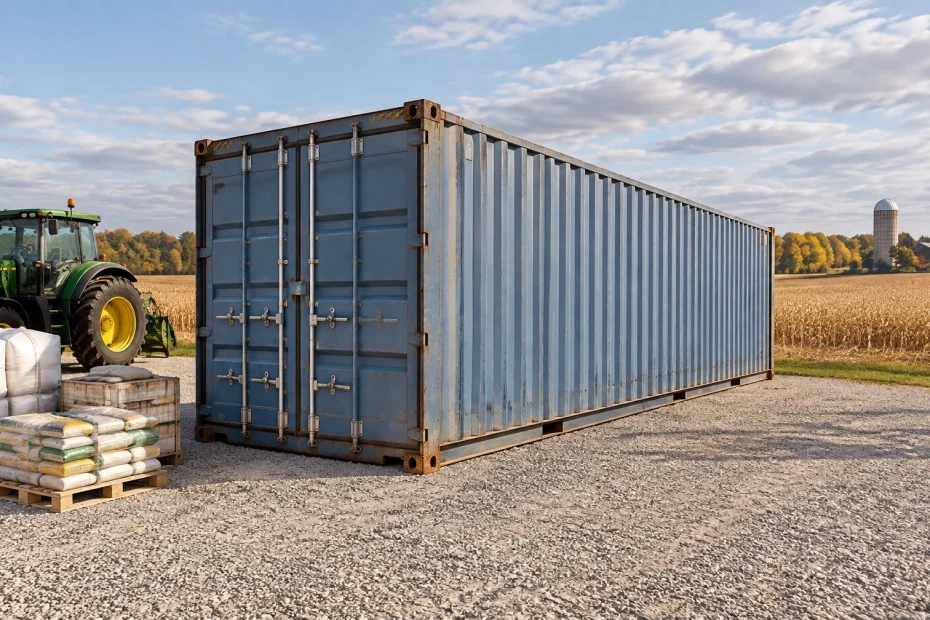
Harvest season compresses an entire year of farm activity into a short operating window. Equipment returns from the field, inputs arrive in bulk, crops need temporary staging, and seasonal employees need organized access to tools and supplies.
A steel shipping container adds secure, on-site capacity without waiting months for a pole barn. For Michigan farms, a 20ft, 40ft, or 40ft High-Cube container can support harvest logistics, protect valuable equipment, and provide storage that moves when your operation changes.
Constable Containers offers containers for sale and lease throughout Michigan, with instant ZIP code pricing, direct delivery, and flexible options for short or recurring harvest needs.
Why Fall Creates a Farm Storage Crunch
Harvest storage problems usually involve more than crops. Common pressure points include:
- Tractor and implement lockup
- Combine and attachment staging
- Seed, fertilizer, and crop-input security
- Tool and repair-part storage
- Fuel and lubricant organization
- Feed and hay overflow
- Specialty grain or seed holding
- Pallets, totes, bags, bins, and packaging
- Temporary storage for seasonal employees
- Separation of clean supplies from field equipment
- Faster access to parts during long harvest days
A container keeps supplies on your property and available 24/7. No trips to an off-site storage facility. No dependence on facility access hours. No need to place equipment under temporary tarps or leave tools in an unlocked trailer.
For a broader comparison of container sizes, review Constable’s guide to 20ft vs. 40ft shipping containers.
What Michigan Farms Can Store
Tractors, Implements, and Equipment
A 40ft container works well for smaller tractors, attachments, implements, and equipment that need protection from rain, snow, and unauthorized access. Measure equipment height, width, and turning requirements before ordering.
Large combines and full-size farm machinery may require an open-sided structure or pole barn. A container is generally better for:
- Smaller tractors
- ATV and UTV equipment
- Planters and attachments
- Replacement parts
- Hydraulic components
- Hand tools
- Chains, straps, and tie-downs
- Repair equipment
Seed, Fertilizer, and Agricultural Chemicals
Use containers for dry, packaged farm inputs only when the products are stored according to their labels and applicable state, local, fire, and environmental requirements.
Recommended practices:
- Keep products in original, labeled containers
- Maintain current SDS documentation
- Separate incompatible products
- Keep chemicals away from feed, food, and drinking water
- Control ignition sources
- Prevent access by children and unauthorized personnel
- Check ventilation requirements before placement
- Do not mix chemical storage with general household or recreational storage
A container does not replace a compliant agricultural chemical storage facility. Confirm requirements with your local township, fire authority, insurer, and product labels.
Feed, Hay, and Specialty Grain
Containers can support short-term storage of bagged feed, seed, packaging, and specialty grain. They are not a replacement for an aerated grain bin.
Avoid using a standard steel container for bulk grain that requires:
- Active aeration
- Temperature monitoring
- Moisture management
- High-volume loading and unloading
- Long-term storage
- Grain movement equipment
Condensation and trapped moisture can damage grain quickly. Use containers for smaller quantities, specialty products, or short-term holding only. Inspect bags, totes, and grain regularly.
Choose the Right Container Size

20FT CONTAINER: SMALL FARM STORAGE
Approximate capacity: 160 sq. ft.
Best for:
- Tools and repair parts
- Seed bags and packaged inputs
- Small implements
- ATV or UTV equipment
- Seasonal supplies
- Bagged feed
- Packaging and harvest materials
- Chemical storage, where permitted and properly managed
The 20ft footprint is easier to place near a shop, field entrance, or existing farm road. It also requires less delivery space than a 40ft unit.
40FT CONTAINER: EQUIPMENT AND BULK STORAGE
Approximate capacity: 320 sq. ft.
Best for:
- Tractor and implement storage
- Larger tool inventories
- Bulk packaging
- Pallets and totes
- Feed and seed overflow
- Seasonal equipment
- Multiple storage zones
A 40ft container provides roughly twice the floor area of a 20ft unit. It can be more efficient for farms with recurring storage needs, especially when delivery access is already available.
40FT HIGH-CUBE: TALL STORAGE AND RACKING
A 40ft HC provides the same approximate floor area as a standard 40ft unit, with additional interior height.
Best for:
- Vertical racking
- Tall shelving
- Stacked supplies
- High-clearance equipment
- Organized parts inventory
- Larger packaging and pallet storage
Check the actual interior dimensions and door opening before ordering. High-cube clearance helps with storage organization but does not make the container suitable for every tall machine.
View current container inventory from Constable Containers or request a quote using your ZIP code.
Site Selection and Rural Delivery Requirements
Rural properties often have plenty of land but difficult delivery conditions. Delivery distance and site access can represent a large share of the total cost, particularly on remote parcels.
Prepare the site before scheduling delivery.
Gate and Road Access
Check:
- Gate width
- Driveway width
- Road weight restrictions
- Soft shoulders
- Sharp turns
- Ditches and culverts
- Low tree limbs
- Utility wires
- Fences and field entrances
For a 20ft unit, plan for approximately 60 feet of straight-line clearance. A 40ft unit commonly requires 100 feet or more. Depending on the truck and placement method, the driver may need approximately 110 feet from the final drop point to unload safely.
Allow approximately 14 feet of vertical clearance for the truck, trailer, container, and surrounding obstacles. Confirm requirements with the delivery team before dispatch.

Ground and Pad Preparation
Place the container on:
- Compacted gravel
- Concrete
- Asphalt
- Firm, well-drained ground
Avoid mud, standing water, soft topsoil, and areas that may freeze or rut before delivery. A level gravel pad is usually the most practical farm option.
Use blocks or concrete supports beneath the corner castings to improve drainage and help keep the doors operating correctly. Prepare the pad before frost, especially when ordering for late-fall delivery.
Michigan Zoning and Agricultural Exemptions
Rules vary by township. A farm-use container may qualify for different treatment than a container used for general commercial storage, but agricultural use does not automatically eliminate local zoning requirements.
Michigan’s agricultural building permit exemption under MCL 125.1510(8) can apply to buildings incidental to agricultural use and not used in retail trade. Local zoning, setbacks, screening, site plans, and land-use approvals may still apply.
Examples show why farmers must verify requirements before delivery:
- Crockery Township: Its agricultural-district rules identify conditions for shipping containers used as accessory buildings, including parcels of at least five acres, a maximum nine-foot height, rear or side-yard placement, screening from view, a neutral exterior, and a level gravel or concrete base. Review the Crockery Township zoning ordinance.
- Bath Charter Township: Agricultural structures used exclusively for farm equipment or products may qualify for the state building permit exemption, but zoning or land-use review may still be required. See Bath’s building permit materials.
Before ordering:
- Contact the township zoning administrator.
- Ask how the container will be classified.
- Confirm setbacks, height, screening, and placement rules.
- Ask whether a zoning permit, site plan, or affidavit is required.
- Describe the intended storage use accurately.
- Confirm whether chemical, fuel, feed, or grain storage creates additional requirements.
- Verify whether non-farm storage could affect agricultural exemption or property-tax treatment.
Do not assume a container is exempt because the parcel is zoned agricultural.
Steel Container vs. Pole Barn
A pole barn remains the better choice for permanent, high-volume equipment storage and financed agricultural expansion. It provides more usable clearance, customization, and long-term capacity.
A container offers different advantages:
| Shipping Container | Pole Barn |
|---|---|
| Rapid deployment | Permanent construction |
| Lower initial project complexity | Greater customization |
| Weather-resistant steel enclosure | More interior volume |
| Relocatable | Fixed location |
| Secure lockable doors | May require additional security |
| Useful for seasonal storage | Better for large machinery |
| Sale or lease options | Construction and financing process |
Choose a container when you need immediate, secure capacity or a seasonal solution. Choose a barn when storage is permanent and equipment size requires a larger enclosed structure.
Rent or Buy for Harvest Storage?
RENT A CONTAINER WHEN:
- Storage is needed for one harvest window
- Equipment or inventory changes annually
- You are testing a new field location
- Capital is reserved for machinery or inputs
- You want pickup after the season
- You need temporary overflow capacity
BUY A CONTAINER WHEN:
- Storage will be used every year
- The container will remain on the farm for multiple seasons
- You need long-term 24/7 access
- You expect recurring feed, seed, or tool storage needs
- You may modify the unit with shelving or racking
- Resale value and permanent ownership matter
Use this calculation:
Purchase price + delivery ÷ monthly rental cost = approximate break-even period
Request both options before harvest. Constable Containers offers 20ft, 40ft, and 40ft HC containers for sale and lease.
Security and Moisture Control
Protect farm contents with basic operating procedures:
- Install a high-security padlock and lockbox
- Keep doors closed when not loading
- Use pallets or blocking to keep contents off the floor
- Maintain airflow around stored materials
- Inspect roof seams, door gaskets, and flooring
- Keep gutters, drainage, and snow away from doors
- Use rodent-resistant packaging
- Avoid storing wet equipment inside
- Check for condensation after temperature swings
- Keep an inventory of stored inputs and tools
For Michigan winters, weather resistance is valuable, but no steel container eliminates the need for moisture management.
Order Harvest Storage From Constable Containers
Constable Containers is a Michigan family business offering direct service without brokers.
- 20FT, 40FT, AND 40FT HC
- USED WWT AND ONE-TRIP OPTIONS
- SALE AND LEASE AVAILABLE
- $500 FLAT DELIVERY UP TO 90 MILES
- AUTO-CALCULATED DELIVERY COSTS BEYOND 90 MILES
- SAME-DAY DELIVERY WHEN ORDERED BY 10 AM, SUBJECT TO AVAILABILITY
- SCHEDULED DELIVERY IN 1–3 BUSINESS DAYS
- OWN DELIVERY FLEET
- INSTANT ZIP CODE QUOTING
- 24/7 ON-SITE ACCESS
Enter your ZIP code at ConstableContainers.com to check current pricing.
$100 OFF ALL CONTAINER PURCHASES, LIMITED-TIME PROMOTION.
GET AN INSTANT QUOTE for your farm’s harvest storage needs, or contact Constable Containers to discuss container size, site access, delivery timing, and lease-versus-buy options.
Frequently Asked Questions
Can I rent a shipping container for harvest season in Michigan?
Yes. A rental can be practical when storage is needed for a short harvest window, temporary equipment staging, or seasonal overflow. Confirm monthly rental, delivery, pickup, and site-access costs before scheduling.
Is a shipping container suitable for grain storage?
A container can hold specialty grain, bagged seed, or short-term grain overflow. It does not replace an aerated grain bin for bulk or long-term grain storage.
Do I need a permit for a farm shipping container?
Requirements vary by township. Agricultural building exemptions may apply, but zoning permits, setbacks, screening, site plans, or affidavits may still be required. Verify local rules before delivery.
Which size is best for a small farm?
A 20ft container is generally suitable for tools, seed, packaged supplies, small implements, and seasonal inventory. Choose a 40ft unit for tractor equipment, bulk supplies, or recurring storage needs.
How much delivery space does a rural property need?
Plan for firm ground, adequate gate and road width, approximately 14 feet of overhead clearance, and about 60 feet of straight-line clearance for a 20ft container or 100 feet or more for a 40ft container.
{“@type”:”FAQPage”,”@context”:”https://schema.org”,”mainEntity”:[{“name”:”Can I rent a shipping container for harvest season in Michigan?”,”@type”:”Question”,”acceptedAnswer”:{“text”:”Yes. A rental can be practical for a short harvest window, temporary equipment staging, or seasonal overflow. Confirm monthly rental, delivery, pickup, and site-access costs before scheduling.”,”@type”:”Answer”}},{“name”:”Is a shipping container suitable for grain storage?”,”@type”:”Question”,”acceptedAnswer”:{“text”:”A container can hold specialty grain, bagged seed, or short-term grain overflow. It does not replace an aerated grain bin for bulk or long-term grain storage.”,”@type”:”Answer”}},{“name”:”Do I need a permit for a farm shipping container?”,”@type”:”Question”,”acceptedAnswer”:{“text”:”Requirements vary by township. Agricultural building exemptions may apply, but zoning permits, setbacks, screening, site plans, or affidavits may still be required. Verify local rules before delivery.”,”@type”:”Answer”}},{“name”:”Which shipping container size is best for a small farm?”,”@type”:”Question”,”acceptedAnswer”:{“text”:”A 20ft container is generally suitable for tools, seed, packaged supplies, small implements, and seasonal inventory. A 40ft unit is better for tractor equipment, bulk supplies, or recurring storage needs.”,”@type”:”Answer”}}]}