
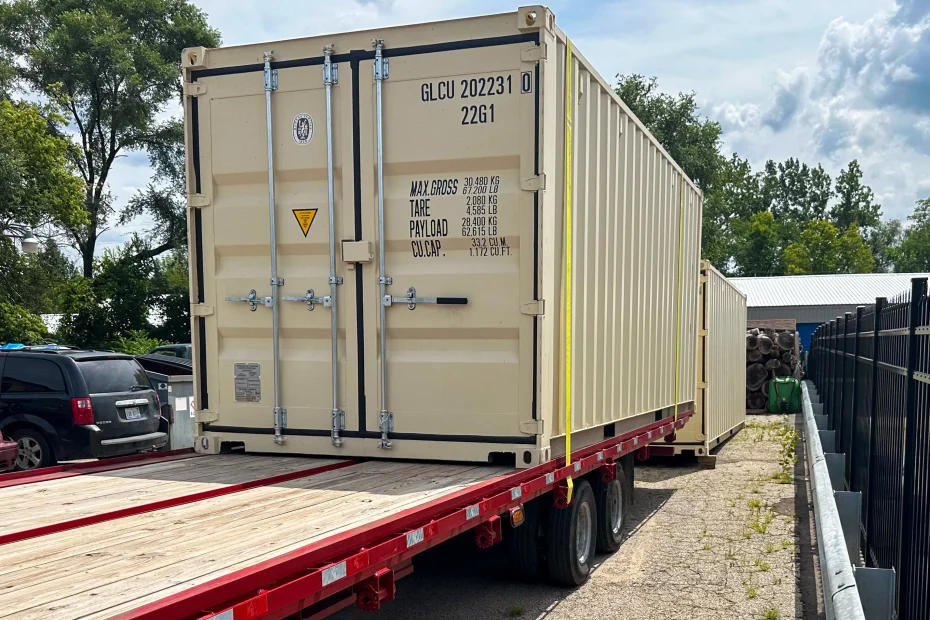
A used shipping container can provide secure, weather-resistant storage for many years. Normal wear may include faded paint, surface rust, dents, and scratched areas around the doors and corner posts.
Painting is optional. Corten weathering steel is designed to develop a protective rust patina. However, Michigan’s moisture, freeze-thaw cycles, snow, road salt, and summer UV exposure can accelerate corrosion: especially around the lower walls, doors, roof seams, and underside.
A properly prepared coating system can improve appearance and extend service life.
LIMITED-TIME OFFER: $100 OFF ON ALL CONTAINER PURCHASES
Before You Start: Inspect The Container
Do not begin with paint. Begin with a condition assessment.
Surface Rust
Usually manageable as a DIY project:
- Light orange or brown discoloration
- Small rust spots around scratches
- Flaking paint with solid steel underneath
- No holes or soft metal
- Doors still opening, closing, and sealing properly
Deep Corrosion
Requires more extensive repair:
- Bubbling or layered rust
- Deep pitting
- Pinholes or visible openings
- Soft metal around the lower rails
- Rust-through on the roof or door bottoms
- Damaged corner castings
- Floor crossmember corrosion
- Water entering through seams or wall panels
Deep corrosion is not a paint problem. It may require steel patching, welding, or professional structural repair before coating.
Inspect these high-risk areas first:
- Lower 2–3 feet of the side walls
- Door bottoms and locking bars
- Roof edges and corner castings
- Underframe and floor crossmembers
- Areas exposed to driveway splash and road salt
- Existing welds, seams, and repaired sections
If the container is no longer wind- and water-tight, painting alone will not correct the issue.
Tools And Materials
Typical DIY project requirements:
- Pressure washer or garden hose
- Mild detergent and stiff cleaning brush
- Wire brush or drill-mounted wire wheel
- Sandpaper or flap disc
- Angle grinder, if needed
- Scrapers for loose paint
- Clean rags
- Mineral spirits or manufacturer-approved degreaser
- Rust converter for limited remaining rust
- Zinc-rich or epoxy metal primer
- Marine-grade DTM or surface-tolerant alkyd coating
- Compatible exterior topcoat
- Rollers, brushes, or airless sprayer
- Painter’s tape and masking materials
- Gloves, eye protection, and appropriate respiratory protection
Use products designed for exterior steel. Confirm primer and topcoat compatibility before purchase.
Step 1: Wash The Exterior
Remove dirt, salt, oil, algae, and loose debris before sanding.
- Choose a dry day with moderate temperatures.
- Apply mild detergent and water.
- Pressure wash or scrub the walls, doors, roof edges, and corner posts.
- Pay special attention to the lower walls and door thresholds.
- Rinse completely.
- Allow the steel to dry fully.
Do not trap moisture under primer. Michigan humidity and overnight dew can create flash rust on exposed steel.
Avoid painting when:
- Rain is expected
- The steel is damp or visibly sweating
- Temperatures are near freezing
- The coating manufacturer’s minimum temperature is not met
- Freezing is expected during the initial cure period
Late spring, summer, and early fall generally provide the best painting conditions in Michigan.
Step 2: Remove Loose Rust And Failing Paint
Paint adheres only as well as the surface beneath it.
Use a hand wire brush for light rust and small areas. A drill-mounted wire wheel or angle grinder can speed up larger repairs. Sand the edges of remaining paint to create a smooth transition between coated and bare steel.
Your preparation goal:
- Remove loose rust
- Remove flaking paint
- Remove loose mill scale
- Smooth sharp edges
- Feather paint edges
- Expose sound steel around corrosion
- Eliminate dust before priming
You do not always need to strip the entire container to bright metal. If the existing coating is firmly adhered and the steel is solid, scuff the surface and repair damaged areas.
Use caution around corrugated wall panels. Aggressive grinding can thin the steel or create low spots.

Step 3: Treat Remaining Rust
Mechanical removal is preferred. Rust converter may be useful where small amounts of firmly bonded oxidation remain.
For localized rust:
- Wire-brush the area.
- Remove all loose material.
- Clean and dry the steel.
- Apply a container-compatible rust converter.
- Follow the product’s dwell and cure instructions.
- Prime only after the treated surface is ready.
Do not use an aggressive acid wash across the entire container. Corten weathering steel has specific chemical and exposure characteristics. Always follow the product technical data sheet and confirm compatibility with weathering steel.
Rust converters do not replace structural repair. They also do not restore steel that has already been consumed by corrosion.
Step 4: Apply The Correct Primer
Primer creates the corrosion barrier between the prepared steel and the finish coat.
Zinc-Rich Primer
Useful for:
- Bare steel
- Scratched areas
- Welded repairs
- Lower walls
- Salt-exposed surfaces
- Areas where additional corrosion protection is required
Zinc-rich primers provide sacrificial protection when properly applied. Use the manufacturer’s specified surface preparation, film thickness, and recoat window.
Epoxy Metal Primer
Useful for:
- Tough moisture resistance
- Previously repaired areas
- Industrial environments
- Strong adhesion over properly prepared steel
Epoxy systems typically provide a durable barrier but may require a compatible topcoat for UV protection.
Surface-Tolerant Alkyd Primer
Useful for:
- Sound but weathered existing coatings
- Lightly prepared steel
- DIY restoration projects
- Areas where complete blasting is not practical
Surface-tolerant does not mean surface-optional. Remove loose rust, oil, dirt, and failing paint first.
Apply primer to all bare steel. Extend the repair area slightly into the surrounding sound coating. Use two thin coats when required by the product instructions rather than one heavy coat.
Step 5: Choose An Exterior Topcoat
For Michigan conditions, choose a coating rated for exterior steel and temperature variation.
Recommended categories:
- Marine-grade direct-to-metal paint
- Exterior industrial enamel
- Surface-tolerant alkyd finish
- Compatible polyurethane topcoat over epoxy primer
- Coating systems rated for UV and salt-spray exposure
A marine or industrial DTM coating is generally a practical choice for a storage container. Surface-tolerant alkyd products can work well for maintenance repainting when applied over a properly prepared and compatible primer.
Prioritize these specifications:
- Exterior steel application
- Direct-to-metal or compatible primer use
- UV resistance
- Moisture resistance
- Salt-spray or marine exposure rating
- Freeze-thaw durability
- Recoat instructions suitable for your schedule
Apply two finish coats when specified. Focus on the lower walls, door edges, roof seams, corner posts, and any repaired areas.
Avoid applying a hard topcoat over an incompatible flexible or chalking coating. When in doubt, test a small area and follow the paint manufacturer’s system recommendations.
Paint Recommendations For Corten Steel
Corten steel is made to weather. Bare Corten can develop a tightly bonded patina under suitable wet-dry conditions, slowing additional corrosion.
Painting is optional when:
- The container remains structurally sound
- The patina is uniform
- Water drains away from the unit
- The container is elevated
- Salt exposure is limited
- Appearance is not a concern
Painting is more useful when:
- The container is near salted roads
- Snow and slush collect against the walls
- The unit sits in a damp area
- You want a specific color
- Rust is developing unevenly
- You want added protection for long-term use
Do not seal in active corrosion. Remove loose rust and prepare the steel before coating. Use a primer and topcoat system specifically approved for steel and compatible with the existing surface.
Step 6: Protect The Underside And Drainage Areas
The underside receives less attention but often experiences the most persistent moisture.
Before delivery or during a major refresh:
- Clear debris from under the container
- Inspect floor crossmembers
- Keep the unit elevated on solid supports
- Maintain drainage around the base
- Avoid placing the container directly on wet soil
- Rinse road salt from lower walls when practical
- Do not block door drainage paths
Gravel, concrete, or another firm, level surface helps reduce standing water. Proper placement matters as much as the paint system.
Step 7: Reinstall Hardware And Check Seals
After the coating cures:
- Test both doors.
- Confirm the locking bars operate smoothly.
- Check door gaskets for damage.
- Inspect roof seams and corner areas.
- Confirm the container is still level.
- Lubricate hinges and locking hardware with a suitable product.
- Install a lockbox or puck-lock system for added security.
Do not paint over moving hardware, drainage openings, or door seals. Mask these areas before application.

Annual Michigan Maintenance Checklist
Inspect the container at least once each year. Spring is a practical time because winter salt, snow, and freeze-thaw damage are easier to identify.
Exterior Inspection
- Check the lower walls for bubbling paint
- Check door bottoms for rust-through
- Inspect roof seams and corner castings
- Look for new dents or scratches
- Check for peeling or chalking paint
- Inspect areas facing a driveway or salted road
Cleaning
- Rinse off dirt and road salt
- Remove leaves and debris from around the base
- Keep drainage paths clear
- Allow the container to dry before touch-up work
Touch-Up
- Wire-brush loose rust
- Sand damaged paint edges
- Degrease the repair area
- Apply compatible rust treatment if needed
- Prime exposed steel
- Apply matching finish coat
Structural And Interior Check
- Confirm the unit remains wind- and water-tight
- Check for ceiling drips or condensation
- Inspect the floor and crossmembers
- Test door seals and locking bars
- Repair leaks before repainting
A small touch-up project is usually easier and less expensive than waiting until corrosion spreads across an entire panel.
Buying A Used Container In Michigan
Starting with a sound container makes every refresh project easier. Constable Containers offers USED shipping containers, including 20ft, 40ft, and 40ft High-Cube options for sale and lease throughout Michigan.
A used unit may have normal dents, faded paint, or surface rust while remaining secure and weather-resistant. Ask about condition, size, availability, and delivery before purchase.
Review current shipping containers for sale in Michigan or learn more about used container options and pricing.
Transparent Delivery Pricing
- Flat $500 delivery up to 90 miles
- Additional mileage may apply beyond the standard delivery area
- Tilt-bed delivery for on-site placement
- Firm, level access required
- Approximately 110 feet of straight clearance may be needed for unloading
As a family-owned Michigan business, Constable Containers provides direct communication, practical guidance, and personalized service: not a faceless national sales process.
Get An Instant Quote
Ready to buy or lease a container?
Use the Instant Quote Tool and enter:
- ZIP Code*
- Rent Or Buy*
- Container Size*
- Delivery Date*
- First Name*
- Last Name*
- Email*
- Phone*
Select a 20ft, 40ft, or 40ft High-Cube container. Get transparent pricing based on your location and project requirements.
GET AN INSTANT QUOTE TODAY

Final Repaint Checklist
Before calling the project complete:
- Inspect the entire container.
- Repair deep corrosion before coating.
- Wash away dirt, oil, and road salt.
- Remove loose rust and failing paint.
- Allow the surface to dry completely.
- Apply a compatible zinc-rich, epoxy, or surface-tolerant primer.
- Apply two compatible exterior finish coats.
- Protect lower walls and underside areas.
- Check doors, seals, seams, and drainage.
- Schedule an annual spring inspection.
For a solid starting point, browse Constable Containers’ Michigan container inventory or contact the team for availability, delivery details, and project guidance.