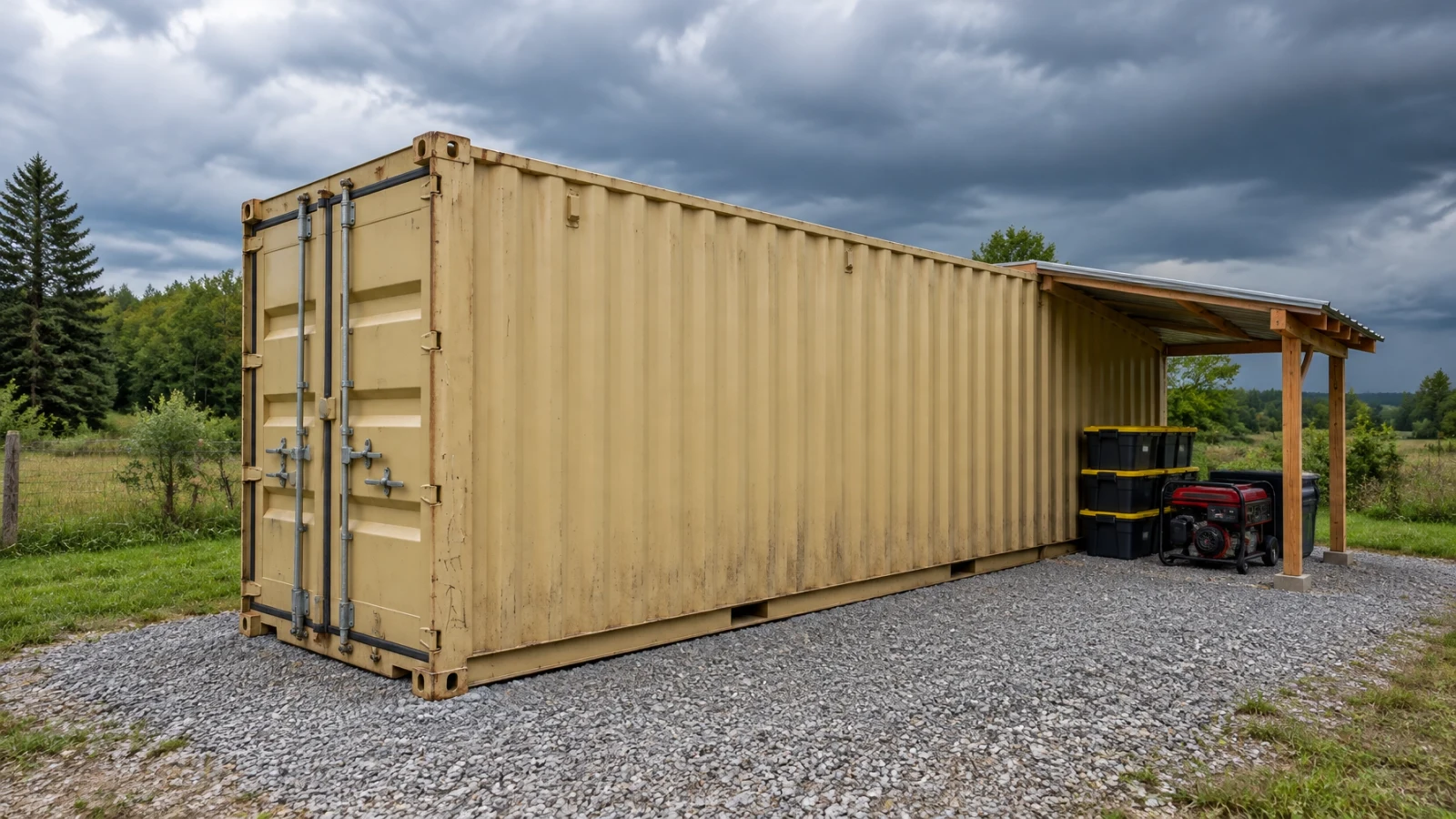
A shipping container can be useful for severe-weather preparedness. It can provide secure, weather-resistant storage for emergency supplies, tools, and a generator. But a standard shipping container is not a tornado-rated storm shelter.
That distinction matters. If your goal is to protect people from a tornado, choose a safe room designed and built to applicable standards, not a plain steel box. A container might serve as the starting shell for a professionally engineered conversion, but only if the complete design, installation, and documentation meet the requirements.
Michigan Severe Weather: What Homeowners Should Know
Michigan’s tornado season can run roughly from April through October, with the greatest activity generally during the warmer months. June is often the peak month, and June through August is a useful period for heightened awareness. Michigan averages about 14 tornadoes per year in the modern 1996–2025 record, though annual totals vary.
In 2026, Michigan had reached 16 confirmed tornadoes by May 20, according to reporting that cited National Weather Service data. That early-season total highlights why preparation matters, but it does not predict the final annual count.
Tornadoes are not the only wind hazard. Severe thunderstorms and damaging straight-line winds are more common in Michigan than tornadoes. For watches and warnings, follow the National Weather Service and your local emergency management guidance.
What ICC 500 And FEMA P-361 Require
ICC 500 is the standard for the design and construction of storm shelters. FEMA P-361 provides guidance for safe rooms, including criteria intended to provide near-absolute protection for occupants when the room is properly designed, constructed, and installed. Michigan’s safe room guidance also references FEMA P-320 and applicable state and local codes.
A safe room is a complete engineered system, not just a strong-looking enclosure. Requirements include:
- Design for extreme wind speeds and resulting wind pressures
- Tested or documented resistance to wind-borne debris
- Walls, roof, connections, and a door assembly designed to work together
- Foundation and anchorage that resist sliding, overturning, and uplift
- Safe access, ventilation, and an operable exit
- Permits, installation documentation, and inspections as required
FEMA’s residential safe-room design guidance uses a 250-mph design wind speed and a test involving a 15-pound 2-by-4 traveling at 100 mph against vertical surfaces. A plain steel box with standard cargo doors is not tested or engineered to meet those requirements simply because it is made of steel.
Read FEMA P-320: Taking Shelter from the Storm and Michigan’s Safe Room Rebate FAQs before discussing a shelter design with a contractor.
Why Burying A Standard Shipping Container Is Risky
A standard shipping container is designed for cargo handling and stacking loads at its corner posts. Its walls are not designed to act as a buried retaining structure.
When soil presses against an unreinforced container wall, that lateral pressure can deform or collapse the wall. Excavation, backfill, and wet Michigan soil add more challenges:
- Soil pressure: Requires engineered wall reinforcement for the specific site and burial depth.
- Water management: Drainage must account for groundwater, runoff, and seasonal saturation.
- Buoyancy: An empty buried container can be pushed upward by groundwater unless the design includes adequate anti-floating measures.
- Corrosion: Persistent soil moisture can accelerate corrosion and reduce long-term durability.
- Access and egress: A deformed door or blocked entrance can trap occupants. Safe entry and exit need to be designed, not improvised.
A buried unit also needs appropriate site engineering, permits, inspections, and a professional design. Do not DIY-bury a container and call it a storm shelter.
Above-Ground Safe Rooms And Cost Expectations
Above-ground safe rooms are a potential option when they are purpose-built or professionally engineered, installed on an adequate foundation, and anchored at engineered points. They may be installed inside a home, in a garage, or as a detached structure, depending on the design and site.
As a starting point for budgeting, prefabricated above-ground units may be quoted around $5,500–$6,700, while site-built safe rooms can range from about $12,700–$34,500. These are broad planning figures, not a quote; actual costs depend on location, size, product, installation, and site conditions.
For comparison, Michigan’s rebate FAQ gives approximate benchmarks of $8,000–$9,500 for an 8-by-8-foot safe room incorporated into new construction and $14,000–$17,000 for a 14-by-14-foot room. Retrofitting an existing home typically costs about 20% more than comparable new construction. These estimates are not necessarily current local contractor prices. Ask for an itemized quote.
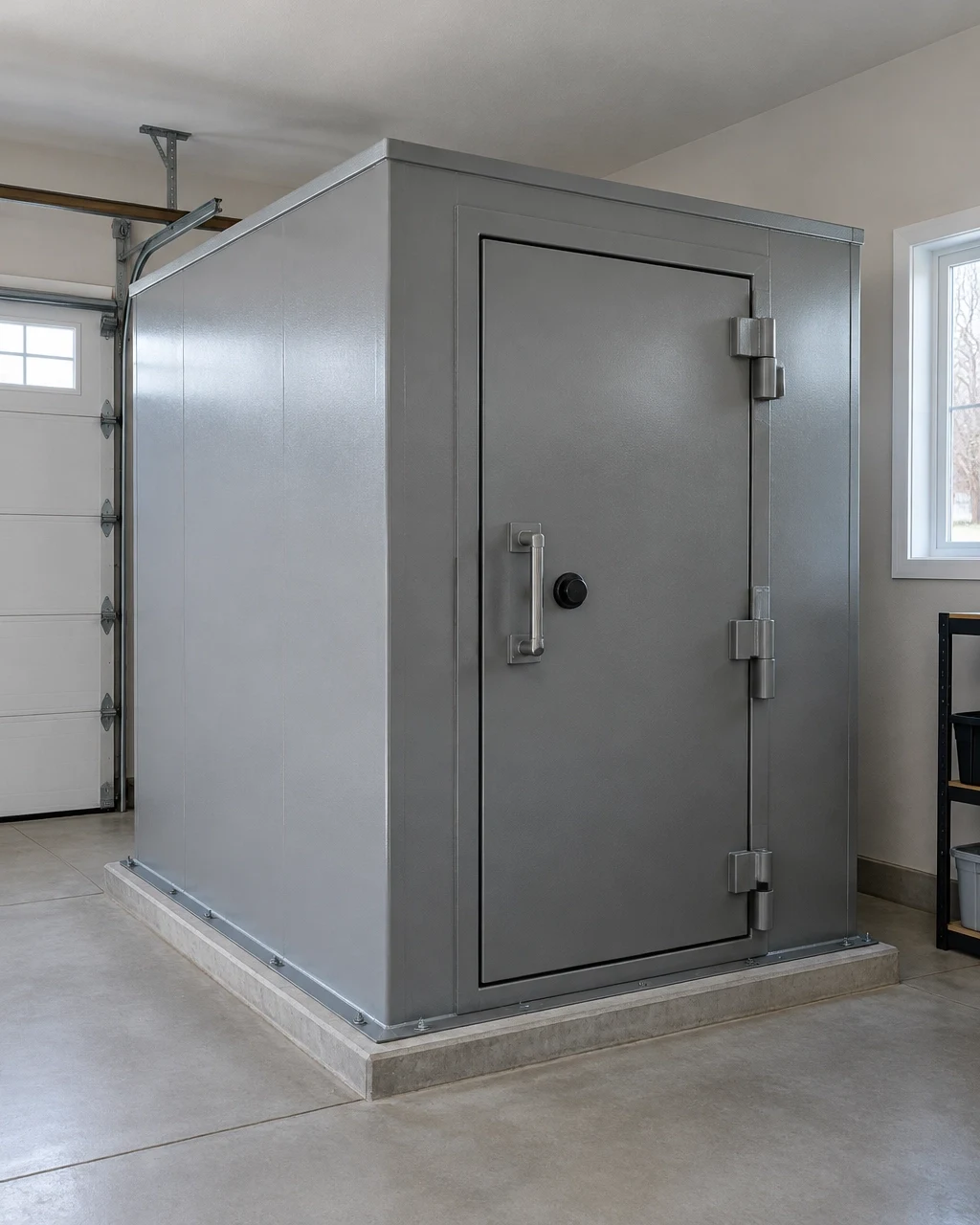
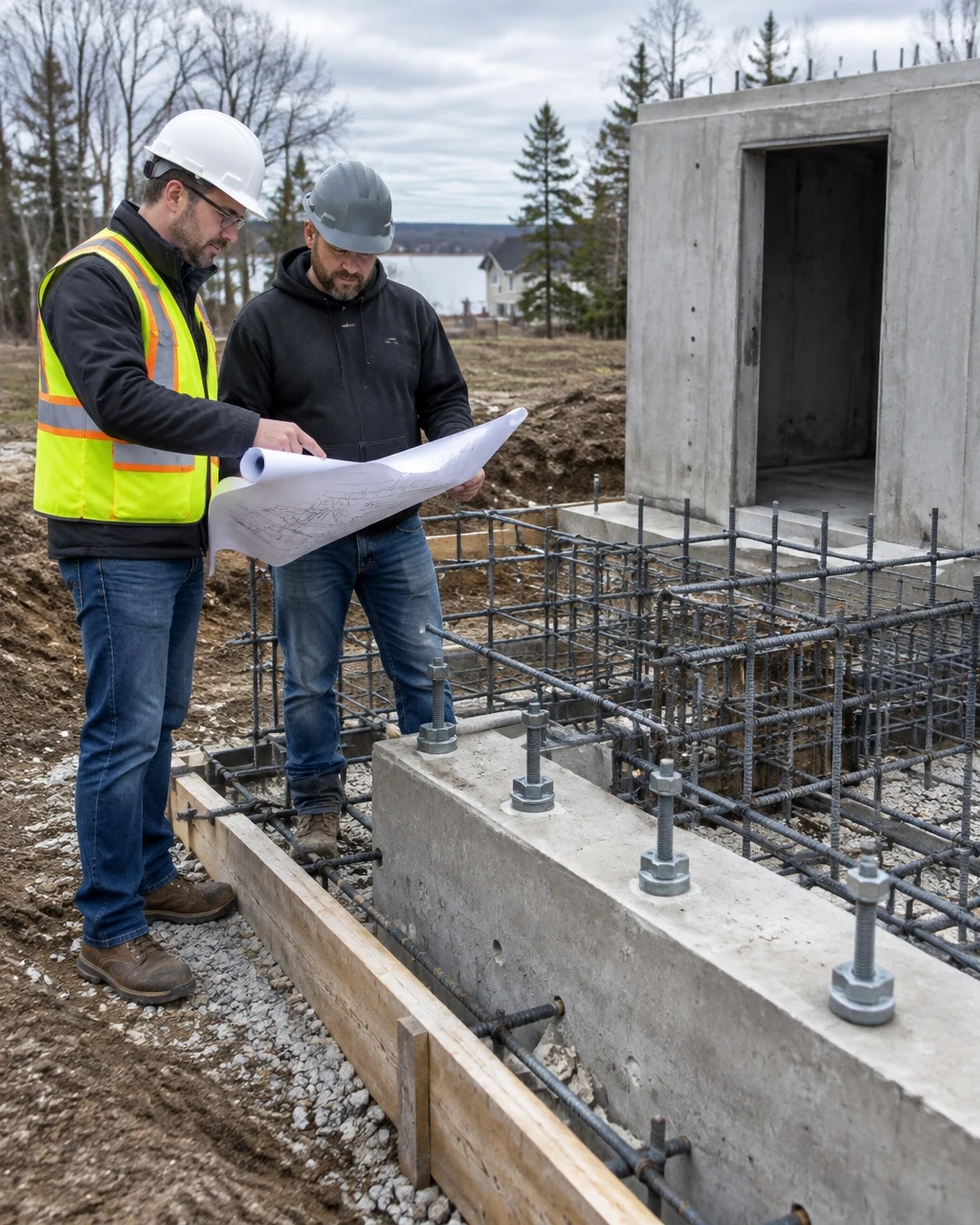
The foundation is part of the protection. An adequately tested shelter installed on a slab that cannot resist the design loads may not provide the intended protection. Have the foundation, anchor locations, and installation reviewed by qualified professionals and the local building official. For background on site preparation, see our guide to shipping container foundations and Michigan winters.
Can A Shipping Container Be Converted Into A Shelter?
Potentially, but it should be treated as a custom engineering project, not a simple container upgrade. A Michigan-licensed design professional would need to evaluate the complete assembly, including reinforcement, connections, foundation, anchors, door, ventilation, and site conditions. The contractor and local officials must be able to review the plans and supporting test or engineering documentation.
Be cautious with claims that a product is “FEMA approved” or “FEMA certified.” FEMA says it does not approve, endorse, or certify safe-room products. Ask for the actual compliance documentation and confirm the design with your building department and, if relevant, the Michigan program administrator.
Michigan Safe Room Rebate: Check Before You Build
As of October 2026, the Michigan Safe Room Rebate Program says applications are no longer being accepted. The program’s published information describes a potential rebate of 75% of eligible costs, up to $7,131.75, for selected, eligible homeowners. Reimbursement is after construction and payment, not an upfront discount.
If you have already applied or are exploring a future funding round, check the program’s current status and requirements directly. Written approval and a notice to proceed are required before purchasing a safe room or starting construction for program eligibility. Confirm permitting, design, and documentation requirements before spending money.
Choose The Right Product For The Right Job
- Need near-absolute life-safety protection? Look for a FEMA/ICC 500-compliant safe room designed for your site. A basement may be an option, but flooding and the condition of the existing structure matter.
- Need secure emergency-supply storage? A shipping container can store supplies, tools, water, and a generator on a farm, job site, or residential property. It is a storage solution, not an occupied shelter.
- Someone proposes burying a bare container as your family shelter? Walk away and consult a licensed design professional and local building official.
For storage, Constable Containers offers 20ft, 40ft, and 40ft High-Cube containers for sale or lease. We’re a family-owned Michigan business with an in-house delivery fleet, not a broker. Sales delivery is a flat $575 up to 100 miles, with freight calculated at checkout beyond 100 miles. Enter your ZIP code for an instant quote or review current inventory. Same-day delivery may be available for orders placed by 10 AM; otherwise, scheduling is typically 1–3 business days. Ask about the current $100-off purchase promotion and its terms. Container pricing does not include engineering or shelter-conversion work.
Permits, Siting, And Before-You-Buy Checks
- Contact your local building department. Ask about building and zoning permits, required inspections, and applicable codes.
- Get a site review. Have soil, drainage, groundwater, flood exposure, and foundation requirements evaluated.
- Confirm the shelter design. Request drawings and documentation for the entire assembly, including its foundation, anchors, door, and ventilation.
- Check the budget and rebate status. Get itemized costs and written program direction before construction if you are seeking rebate eligibility.
- Keep storage and shelter separate. A container can hold supplies, but do not plan to shelter inside an unmodified unit.
For a regular storage purchase, our Michigan container buying guide covers sizes and ordering. For anchoring and foundation considerations, get site-specific advice from a qualified professional.
Frequently Asked Questions
Are Shipping Containers Safe In A Tornado?
A standard container is not a tornado-rated safe room. It may be useful for secure storage, but do not rely on it to protect people from tornado winds and flying debris.
Can You Bury A Shipping Container For A Storm Shelter?
Not safely without a site-specific engineered design. Soil pressure, drainage, groundwater buoyancy, corrosion, and emergency exit design all need to be addressed. Do not bury a standard container as a DIY shelter.
How Much Does A Container Storm Shelter Cost?
There is no reliable total based on the container shell alone. Professional design, reinforcement, excavation or foundation work, anchoring, safe-room doors, permitting, inspection, and installation may make up much of the cost. Compare itemized quotes for compliant safe rooms before deciding.
Does Michigan Offer A Storm Shelter Rebate?
Michigan’s program information lists a potential rebate of 75% of eligible costs, capped at $7,131.75, but the state currently says applications are no longer being accepted. Check the official program page for current status. If a future or existing application applies to you, obtain written approval before purchasing or starting construction.