Short answer: shipping containers are rodent-resistant, not automatically rodent-proof. Steel walls and doors are a strong barrier, and a well-maintained container offers better protection than a wood shed or fabric storage bag. But mice do not need to chew through steel. They look for an opening.
In Michigan, November is a good time to inspect your container. Once cold weather sets in, mice seek shelter, warmth, and nesting material. Furniture, upholstery, cardboard, seed, feed, and camping gear can make a storage unit an attractive place to settle in.
Why Mice Look For Shelter In November
The first hard frosts push mice to find protected places to nest. A container can offer shelter from wind and snow, especially if there is a gap at a door, vent, floor, or wall seam.
The steel itself is not the weak point. The openings are. Even a gap around ¼ inch (about 6 mm) can be enough for a mouse to squeeze through. That makes a careful seal and entry-point check more useful than assuming a steel unit is completely sealed.
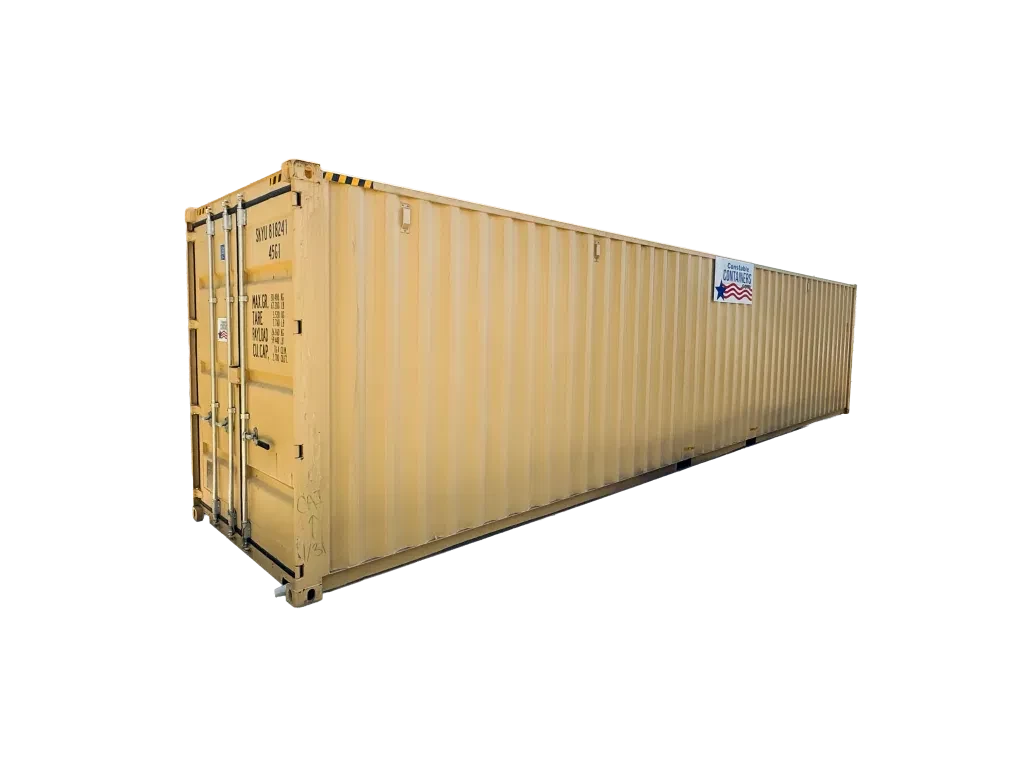
Where Mice Can Get In
Check these areas before storing seasonal items or closing up your unit for winter:
- Door gaskets: Look for cracked, hardened, torn, or flattened rubber. These gaskets should compress when the doors close.
- Vent openings: Check that original vent mesh is intact. If you need to add a barrier, use ¼-inch hardware cloth secured firmly over the opening. Keep the vent clear so airflow is not blocked.
- Rust holes and seam gaps: Inspect corners, seams, and lower wall panels for corrosion or small openings. Patch damaged steel rather than covering it with a temporary fix alone.
- Under-door gaps and uneven placement: Frost heave or uneven ground can affect the container’s alignment and create a gap at the sill. Check that the unit is level and the doors close and latch correctly.
- Flooring and plywood edges: Look for corrosion, damage, or openings where the floor meets the steel walls. Pay particular attention to the edges and corners.
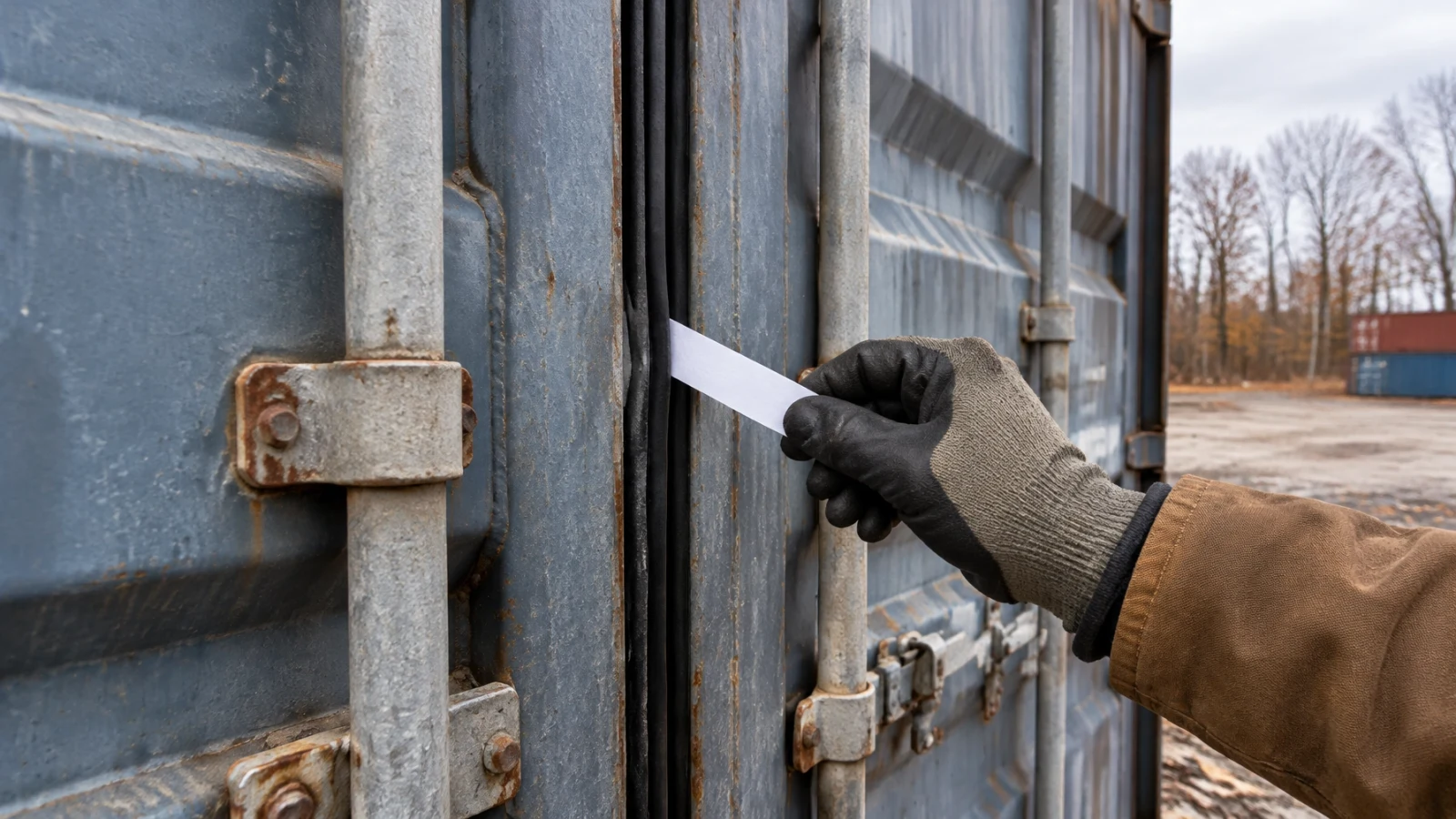
Test Door Gaskets With A Paper Strip
Close a door on a narrow strip of paper, then pull gently. If the strip slides out freely, the gasket may not be sealing well at that point. Repeat the test around the door edges. It is a quick check, not a substitute for looking over the full gasket and door frame.
A WWT (Wind and Water Tight) container is intended to keep out wind and water, but that designation is not a promise that every opening is rodent-proof. Inspect the actual unit, especially if it is used.
Seal Small Gaps And Repair Worn Seals
For a small gap, pack it firmly with coarse steel wool and seal over it with silicone caulk. For a larger opening or a rust-damaged panel, use a suitable metal patch. Steel wool can corrode in damp locations, so a lasting metal repair is the better option for exposed or larger gaps.
Replace gaskets that are cracked, torn, or no longer compress. Gasket kits are often a manageable DIY repair, but check that the replacement fits the door properly. Do not rely on spray foam alone. Mice can chew through it.
If you find a substantial rust hole, floor problem, or door that will not align, address the underlying repair rather than only plugging the visible gap. For placement and winter upkeep, see our guide to how shipping containers handle Michigan winters.
Reduce Nesting Spots Around The Container
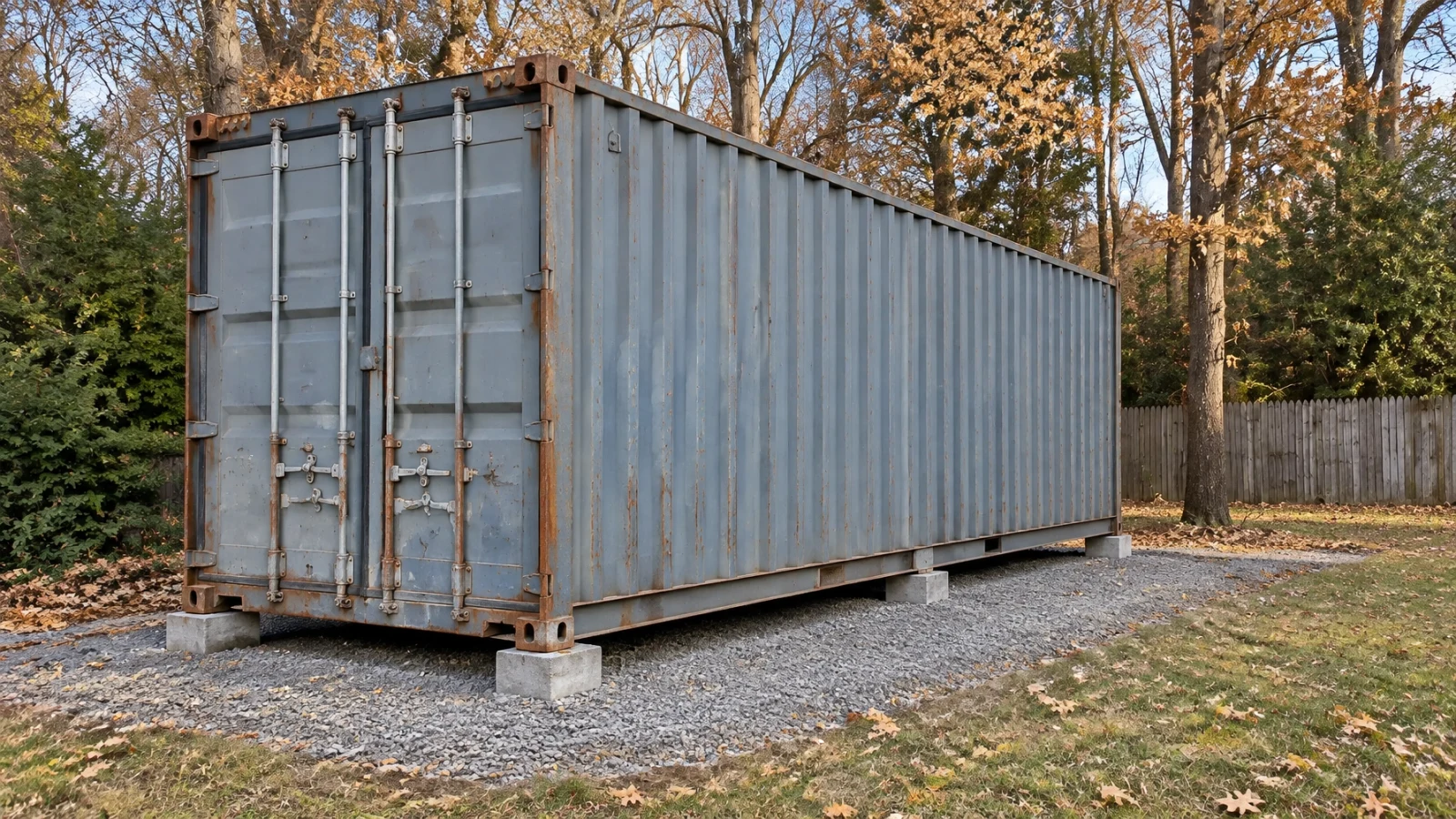
Mice and chipmunks may nest beneath a unit sitting directly on grade. A compacted gravel pad, blocks, or piers can lift the container and help keep the area underneath accessible for inspection. Keep the unit level; uneven placement can also interfere with door operation.
Keep vegetation short and remove clutter, leaves, and stored materials around the container. If space allows, a broad vegetation-free buffer, sometimes suggested at roughly 50 feet for outbuildings, can reduce nearby cover. That is a rule of thumb, not a guarantee or a requirement for every property. Start by keeping the immediate perimeter clear.
Do not store bird food, seed, or animal feed loosely near or inside the unit. If those items must be stored there, use tightly sealed metal bins.
If Mice Are Already Inside
Treat droppings, urine, and nesting material carefully. Deer mice are among the rodents associated with hantavirus, and disturbing dry contamination by sweeping or vacuuming can send particles into the air. Michigan has reported a confirmed human case; that does not mean every mouse or dropping carries hantavirus, but it is a reason to use careful cleanup practices.
For a small cleanup:
- Ventilate first: Open the container and leave it for at least 30 minutes before cleaning. Keep people and pets away during that time.
- Protect yourself: Wear disposable gloves. An N95-style mask is an added precaution, especially if there is dust or nesting material.
- Wet the contamination: Thoroughly soak droppings, nests, and dead rodents with an EPA-registered disinfectant or a bleach solution. CDC guidance gives a mixture of about 1½ cups of household bleach per gallon of water. Follow the product label and never mix bleach with other cleaners.
- Wait, then wipe: Let the disinfectant sit for 5–10 minutes, or as directed on the label. Pick up material with paper towels.
- Bag and disinfect: Double-bag the waste, seal it, disinfect hard surfaces, and wash your hands after removing gloves. Launder or discard contaminated fabric items as appropriate for the material.
For a heavy infestation, avoid handling it yourself and contact a qualified pest-control or cleanup professional. Review the CDC rodent cleanup instructions and CDC guidance on sealing openings for more detail.
Trap And Monitor Through Winter
If you have seen signs of mice, place snap traps along walls and in corners, where mice tend to travel. Peanut butter can be used as bait. Check traps at least weekly and dispose of catches safely.
Avoid using poison bait inside a unit that holds pet food, animal feed, or items family members handle. Poisoned mice may die in an inaccessible area, creating odor and attracting other pests.
Use these storage habits to lower the chance of a repeat visit:
- Choose sealed plastic totes instead of cardboard boxes.
- Store seed and feed in tight-fitting metal bins.
- Leave a small inspection gap between stored items and container walls.
- Check door gaskets before winter and inspect the container quarterly.
- Remove food residue, nesting material, and clutter promptly.
Ventilation also matters for managing condensation. Keep vents working, but make sure their mesh is intact. For additional door and lock maintenance information, see our guide to shipping container security in Michigan.
Buying A Used Container? Inspect The Entry Points
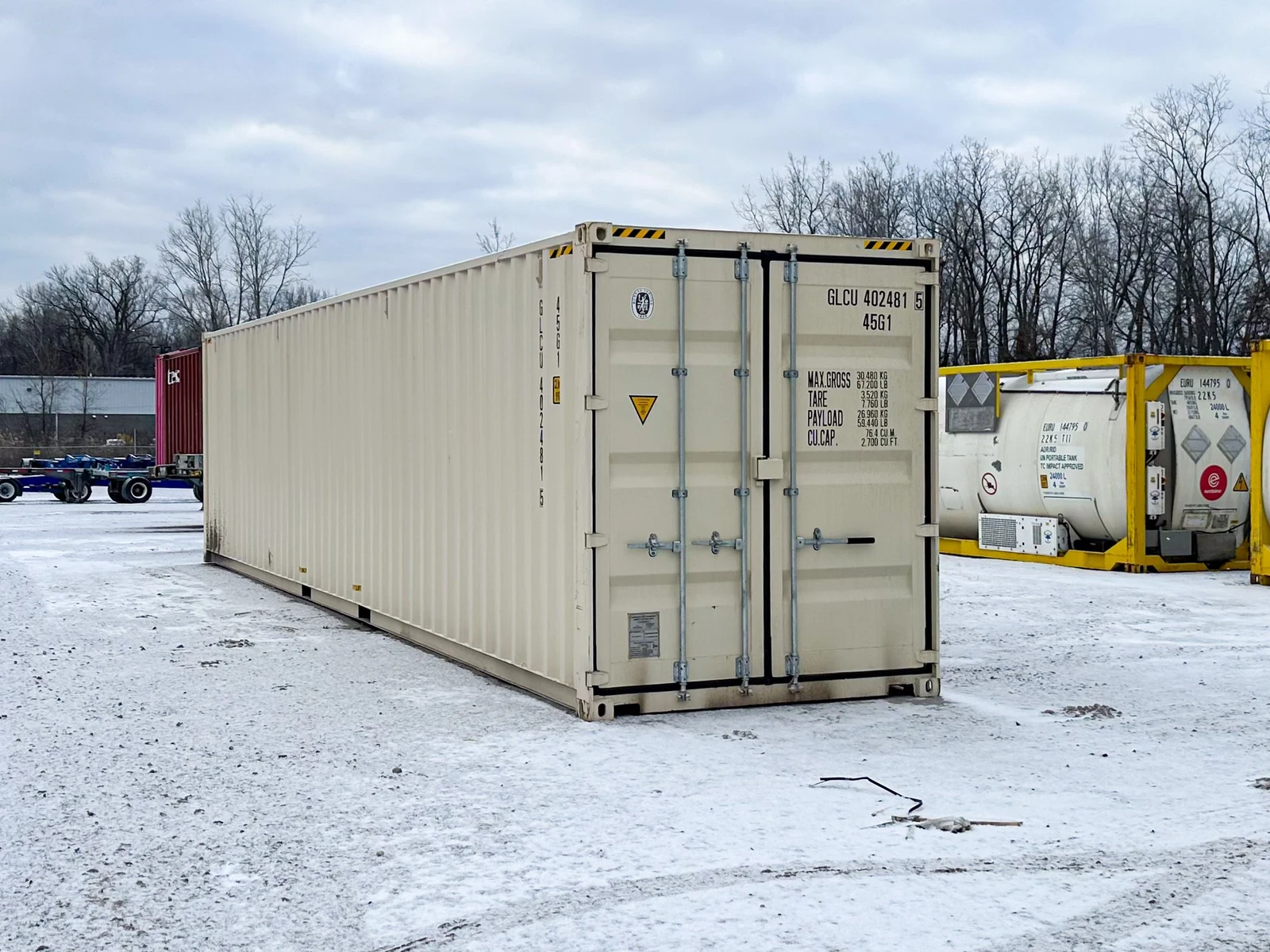
When shopping for used shipping containers in Michigan, include rodent-entry checks in your inspection. Examine the gaskets, vents, lower seams, floor edges, and door sill. Look for droppings or nesting material, and test that the doors close evenly.
Steel construction is a major advantage over a wood shed, but condition matters. Read more about shipping containers versus sheds and what to know before buying a shipping container in Michigan.
Constable Containers is a family-owned Michigan business selling and leasing 20ft, 40ft, and 40ft High-Cube containers, including used WWT units. Units are inspected before release and checked again at delivery, including door seals and gaskets.
Get an instant quote by entering your ZIP code at Constable Containers. Sales delivery is $575 flat up to 100 miles; distance is calculated at checkout beyond 100 miles. Same-day delivery may be available for orders placed by 10 a.m.; otherwise, typical delivery is 1–3 business days, subject to availability, location, and scheduling. LIMITED-TIME OFFER: SAVE $100 ON CONTAINER PURCHASES. Contact us to confirm current availability and delivery timing. Beyond 100 miles, freight is calculated at checkout.
FAQ
Are Shipping Containers Completely Rodent-Proof?
No. Steel walls and doors are a strong barrier, but mice can enter through gaps around worn gaskets, vents, damaged floors, and rust holes. Regular inspection and repair help keep a container rodent-resistant.
Can Mice Chew Through A Shipping Container?
Mice do not chew through steel. They exploit openings in seals, seams, vents, floors, and damaged areas.
What Size Gap Can A Mouse Fit Through?
A mouse may squeeze through an opening around ¼ inch (6 mm) wide. Check small gaps around doors, vents, and the floor.
Is Steel Wool Enough To Seal A Hole?
Steel wool can help fill a small gap when sealed over with caulk. For a larger or exposed opening, use a proper metal patch or repair.
What Should I Do If I Find Mouse Droppings?
Do not sweep or vacuum them dry. Ventilate the container for at least 30 minutes, wet the material with disinfectant, then wipe it up and dispose of it safely. For more extensive contamination, contact a professional and follow CDC cleanup guidance.
Does WWT Mean A Container Is Rodent-Proof?
No. WWT means Wind and Water Tight. Inspect the gaskets, vents, floor, and seams to check for potential rodent entry points.